
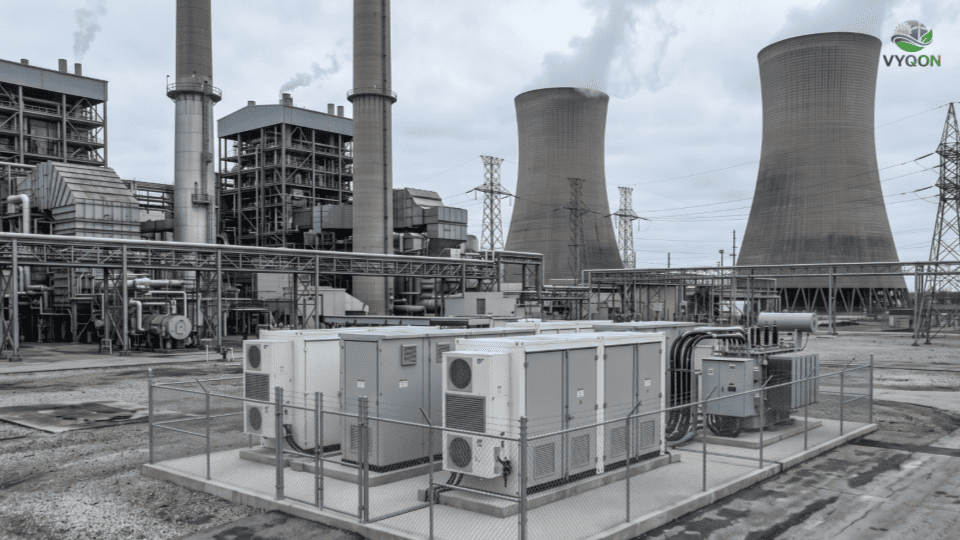
NTPC Limited, India’s largest integrated power utility, has issued a global Expression of Interest (EoI No. NTPC/PE/ET&PR/EOI-06/2026-27, issued September 09, 2026) for setting up a pilot project to develop and install a grid-connected Sodium-Ion Battery Energy Storage System (BESS). The global invitation seeks responses from qualified entities, including battery cell and pack manufacturers, system integrators, and engineering, procurement, and construction (EPC) contractors.
The proposed pilot will be deployed at existing NTPC Thermal Power Stations or NTPC office buildings, with site selection to be finalized during the technical evaluation process. The initiative aims to evaluate the technical performance, safety, reliability, degradation, operating characteristics, and techno-commercial viability of sodium-ion battery technology under real-world Indian grid and climatic conditions. Stationary energy storage in India and globally is currently dominated by Lithium Iron Phosphate (LFP) chemistry; NTPC’s pilot is structured to evaluate sodium-ion as a potential functional alternative and supply-chain hedge against lithium import reliance prior to potential larger-scale procurement.
Interested global and domestic applicants must submit their soft-copy responses by October 15, 2026. Clarifications can be submitted until October 05, 2026. EoI responses will be opened on October 16, 2026, with submitted proposals maintaining a Response Validity period of six (6) months from the submission deadline.
Project Scope and Division of Responsibilities
The pilot project is designed to generate field operating experience, establish performance and cost benchmarks, and evaluate how sodium-ion BESS can support renewable energy integration, energy shifting, peak demand management, and grid voltage and frequency stability. Candidate deployment sites include land within existing NTPC Thermal Power Stations or office premises, with final allocation determined during the proposal evaluation phase.
NTPC Scope of Work
- Land Allocation: Provide clear land within NTPC premises for the installation and commissioning of the BESS enclosure and balance-of-plant systems.
- Grid Point of Interconnection (PoI): Provide an incoming feeder at the nearest available 415 V LT Switchgear for BESS charging and discharging.
- Auxiliary Power Supply: Supply auxiliary power at 415 V LT from the nearest available switchgear.
- Site & Regulatory Facilitation: Supply site-related inputs, assist with physical site access, and facilitate the applicant’s requests for applicable statutory clearances and approvals.
- Operational & Data Support: Assist during installation, testing, and commissioning, and support the collection and analysis of operating data throughout testing and operational phases.
Applicant Scope of Work
- Turnkey System Delivery: Complete design, engineering, manufacturing, supply, transportation, storage, erection, testing, and commissioning of the Sodium-Ion BESS (including cells, modules, racks, Battery Management System [BMS], Power Conversion System [PCS], Energy Management System [EMS], switchgear, and auxiliary systems).
- Electrical Integration: Complete electrical, control, communication, protection, and metering integration from the battery container to the designated 415 V LT PoI.
- Safety Infrastructure: Provide all fire detection, suppression, structural safety, and emergency system infrastructure mandated by statutory codes and CEA regulations.
- Maintenance & Operations: Execute a 3-year Comprehensive Annual Maintenance Contract (AMC) starting from the date of commissioning, supplying all necessary technical services, consumables, and spare parts.
- Personnel Technical Training: Provide formal technical and safety training to NTPC operational and maintenance staff covering sodium-ion BESS operation, safety protocols, and subsystem diagnostics.
- Operational Data Logging & Sharing: Log, collect, and share system operational data and performance analytics with NTPC during both the initial testing phase and the 3-year AMC period.
- Performance Guarantees & Regulatory Compliance: Guarantee baseline operational parameters (usable energy capacity, round-trip efficiency, C-rate, system availability, and annual degradation rates) while complying with ‘Make in India’ and Public Procurement orders issued by Government of India ministries.
Technical Options, TRL Categories, and Cost-Sharing
Applicants are required to submit technical datasheets and budgetary cost estimates for two configuration options detailed in Section-V (Annexure-4) of the EoI:
- Option-1: A standardized 100 kWh usable-energy capacity pilot BESS at the Point of Interconnection (415 V LT Switchgear incoming feeder) to serve as a baseline for techno-commercial comparison across competing cell chemistries and vendors.
- Option-2: A proposer-defined BESS capacity based on the applicant’s standard technology configuration and operational demonstration requirements. Applicants submitting Option-2 proposals must provide complete technical datasheets specifying rated power (kW), rated and usable energy capacity (kWh/MWh), discharge duration, container voltage and current operating limits, C-rate capabilities, and single-line diagrams (SLDs).
Technology Readiness Levels (TRL) and Cost-Sharing Framework
| TRL Category & Maturity Level | Cost-Sharing Framework & Eligibility Rules |
| TRL 4 & TRL 5<br>(TRL 4: Laboratory Validation / TRL 5: Prototype Demonstration in Relevant Environment) | • Applicant must contribute a minimum of 50% of total project cost.<br>• Financial contribution may be returned by NTPC upon successful demonstration, subject to mutually agreed terms.<br>• Eligible for consideration. |
| TRL 6 & Above<br>(TRL 6+: Prototype Demonstration in Industrial / Operational Environment) | • No mandatory minimum financial contribution required.<br>• Preference given to applicants offering higher financial contributions.<br>• Eligible for consideration. |
| Below TRL 4<br>(Basic Setup / Early-Stage Laboratory Research) | • Automatically excluded / ineligible from consideration. |
Intellectual Property Rights (IPR)
- Baseline Technology IPR: Core intellectual property for the underlying sodium-ion technology remains exclusively with the applicant or technology provider.
- Pilot-Generated IPR: Intellectual property generated specifically from the execution and operational demonstration of the grid-connected pilot project will be co-owned by NTPC and the applicant upon successful project completion.
- TRL 4–5 Commercialization: For TRL 4–5 projects where NTPC returns the applicant’s financial contribution post-demonstration, pilot-generated IPR may be monetized separately during commercial scale-up under mutually agreed contractual terms.
CEA Safety Regulations Compliance
All proposed battery storage systems must meet mandatory safety standards set out in the draft Central Electricity Authority (CEA) 2025 regulations (Chapter X-A):
- Two-Fault Tolerance: System architecture must incorporate two-fault tolerance—officially defined as “the system’s ability to continue to operate safely or shut down safely even after two independent faults have occurred”—preventing catastrophic failure during overcharge, over-discharge, short-circuit, or thermal events.
- BMS Cell-Level Monitoring: The BMS must continuously monitor and log voltage, current, temperature, and thermal runaway parameters at both the cell and module levels. The system must trigger audio-visual alarms when operating ranges are breached and automatically halt charging or discharging when temperature limits exceed OEM specifications.
- PCS Synchronization: The PCS must support fully automatic, unattended grid synchronization, seamless paralleling, auto-disconnection, and self-protective diagnostic routines to isolate internal faults.
- Coolant Line Protection: Pursuant to Regulation 122(B)(6), dielectric cooling fluid systems and lines must be routed and secured to ensure that coolant failure or leakage cannot cause short-circuiting across live electrical parts or battery cells.
- Container Design & Spacing: Battery containers must be explosion-proof, featuring forced mechanical ventilation and automated louvers for pressure management and flammable gas release. Enclosures must maintain a minimum distance of 7.5 meters from exterior building walls or roof overhangs (unless validated by Large Scale Fire Testing [LSFT]) and 3 meters between adjacent containers (unless validated by LSFT, with container walls rated for a minimum 2-hour fire resistance).
- Fire Suppression: Water-based automatic fire suppression systems are mandatory for all battery containers rated at 200 kWh and above.
- Physical Security & Emergency Stops: Per Regulations 122(I) and 122(J), BESS installations must feature perimeter fencing at least 1.8 meters high, CCTV, motion or break-glass sensors, and accessible manual emergency stop buttons. Upon anomaly detection, automated protection must shut down the affected system section within a pre-set timeframe.
- Third-Party Safety Audits: Owners must execute an independent third-party fire safety audit (Regulation 122(L)) and submit the report to the Electrical Inspector within three months of regulatory notification.
Submission Details, Timeline, and Procedural Requirements
Applicants must submit soft-copy responses comprising the Application Form and Annexures 1 through 4 of Section-V. Every page of the submission must be signed and stamped by an authorized representative holding a valid Power of Attorney.
Milestone Schedule
- EoI Issuance Date: September 09, 2026
- Deadline for Seeking Clarifications: October 05, 2026
- EoI Submission Deadline: October 15, 2026
- EoI Response Opening Date: October 16, 2026
- Response Validity Period: Six (6) months from submission deadline
Submission Contact Routing
Submissions must be transmitted electronically via email concurrently to both designated NTPC procurement officers:
- Primary Recipient (To):
abdulshaheedpk@ntpc.co.in - Carbon Copy (CC):
suneetmehta@ntpc.co.in
Background and Strategic Rationale
NTPC Expansion Targets and Energy Transition Mandate
NTPC Group currently maintains an installed utility capacity of 91,080 MW, with over 37 GW of capacity under construction. In FY 2025-26, NTPC generated 432 billion units (BU) of electricity—accounting for approximately 24% of India’s total power generation—generating revenue of INR 1,897.98 billion and a net profit of INR 275.46 billion.
Under its long-term power expansion roadmap, NTPC aims to reach 149 GW of total installed capacity by 2032. The projected capacity breakdown comprises:
- Thermal Power: 83.6 GW (56.11%)
- Renewable Energy: 60.0 GW (40.27%)
- Hydro Power: 4.7 GW (3.15%)
- Nuclear Power: 0.7 GW (0.47%)
- Energy Storage Commitments: 1 GW of Pumped Storage Projects (PSP) and 22 GWh of Battery Energy Storage Systems (BESS).
NTPC’s transition plan targets a ~44% non-fossil capacity share (~43.4% renewables and hydro, plus 0.7 GW nuclear) by 2032. Integrating this variable non-fossil generation creates an immediate utility requirement for flexible grid assets, directly driving NTPC’s 22 GWh BESS deployment target.
NTPC 2032 Capacity Target: 149 GW
├── Thermal: 83.6 GW (56.11%)
└── Non-Fossil Assets: ~65.4 GW (~43.89%)
    ├── Renewable Energy: 60.0 GW (40.27%)
    ├── Hydro Power: 4.7 GW (3.15%)
    └── Nuclear Power: 0.7 GW (0.47%)
Storage Requirements: 22 GWh BESS | 1 GW Pumped Hydro
National Storage Demand Projections
Modeling by the Central Electricity Authority (CEA) projects that India will require 411 GWh of energy storage capacity (comprising 175 GWh / 33.6 GW of BESS and 236 GWh / 26.7 GW of Pumped Storage) by 2031-32 to maintain grid frequency and balance peak demand. Approximately 156 GWh of storage capacity is currently under active implementation or procurement across national utilities.
Market Benchmark and Supply Chain Diversification
Utility-scale battery deployment in India currently relies almost exclusively on imported Lithium Iron Phosphate (LFP) chemistry. However, India possesses limited domestic commercially exploitable lithium reserves, leaving grid infrastructure exposed to international supply chain bottlenecks and raw material price volatility.
Sodium-ion battery technology offers an alternative path for stationary grid storage due to the global abundance of raw sodium salts. In August 2026, India’s Renewable Energy Secretary, Santosh Kumar Sarangi, noted that domestic sodium-ion research had reached Technology Readiness Level 7 (TRL 7—prototype demonstration in an operational environment), estimating commercial production viability within two to three years.
By initiating this pilot, NTPC is establishing early technical benchmarks for sodium-ion performance under local thermal and electrical stress. The pilot serves as a technology evaluation step and supply-chain hedging mechanism as NTPC prepares to procure its broader 22 GWh battery storage portfolio.
Official Tender Link
- Hyperlinked Text: NTPC Tender Portal
- Plain Text URL:
https://ntpctender.ntpc.co.in
Official EoI Reference & Submission Details
- EoI Reference Number:
NTPC/PE/ET&PR/EOI-06/2026-27 - Submission E-mails: suneetmehta@ntpc.co.in / abdulshaheedpk@ntpc.co.in
- Submission Deadline: 15 October 2026
Leave a Comment