
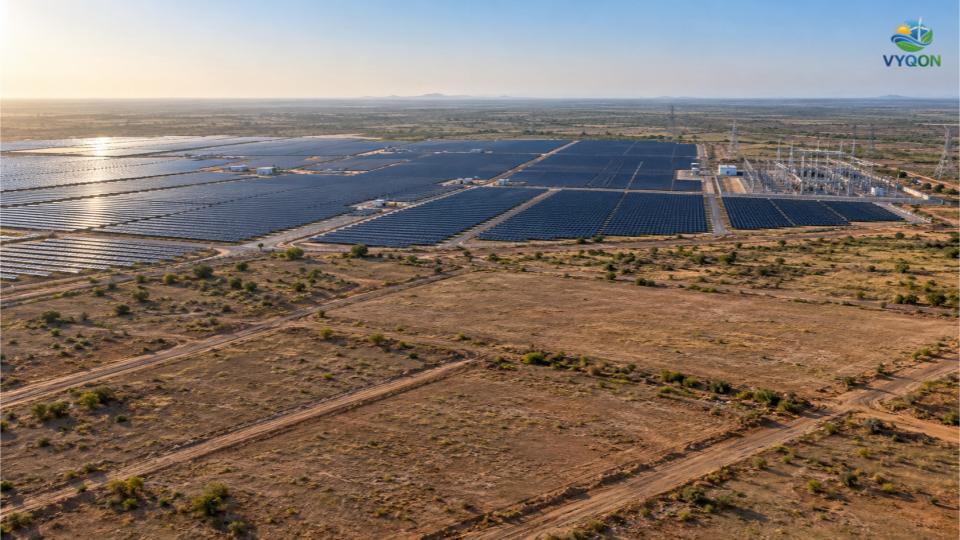
IndianOil’s renewable energy subsidiary plans a 300 MW solar development near the 220 kV Bhalgamda GETCO substation in Morbi, Gujarat, with bids for land aggregation due by 5 November 2026.
Gujarat, 8 October 2026: Terra Clean Limited (TeCL), a wholly owned renewable energy subsidiary of Indian Oil Corporation Limited (IndianOil), has invited bids for land aggregation to support a proposed 300 MW solar power project in Morbi district, Gujarat.
The proposed development will be located in the vicinity of the 220 kV Bhalgamda substation operated by Gujarat Energy Transmission Corporation Limited (GETCO) and is identified as an intra-state transmission system (InSTS)-connected solar energy project.
The company has issued the Request for Proposal (RfP) under Tender Reference TeCL/CC/Solar/2026-27/13, with tender search code TeCl-2026-TN000009.
The tender was made available on 7 October 2026, with the final bid submission deadline scheduled for 5 November 2026.
The procurement represents an early stage in the solar project’s development, focusing on identifying and aggregating suitable land before major construction activities can begin.
It does not constitute an engineering, procurement and construction (EPC) contract award or confirmation that the proposed solar capacity has been commissioned.
Terra Clean Announces Land Aggregation Tender for 300 MW Solar Project
According to Terra Clean’s official tender register, the procurement concerns land aggregation for a 300 MW solar energy project near the Bhalgamda GETCO substation in Morbi district.
The project is intended to connect to Gujarat’s intra-state transmission network.
Terra Clean has directed prospective bidders to the Telecommunications Consultants India Limited (TCIL) Electronic Tender Services platform for participation.
The procurement follows a two-bid system comprising technical and financial submissions.
The important tender milestones are:
- Tender document availability: 7 October 2026
- Pre-bid meeting: 21 October 2026 at 3:00 PM IST
- Document download deadline: 4 November 2026 at 5:00 PM IST
- Online bid submission deadline: 5 November 2026 at 3:00 PM IST
- Techno-commercial bid opening: 5 November 2026 at 3:30 PM IST
- Indicative land-aggregation contract duration: Nine months from the applicable contractual commencement trigger
The tender does not require an Earnest Money Deposit (EMD). However, bidders must provide a signed Bid Security Declaration along with other mandatory documents.
Prospective bidders must also comply with the confidentiality and documentation requirements specified in the procurement conditions.
The tender documents are available without a document fee.
The published schedule remains subject to any corrigenda, clarifications or amendments issued through the official procurement platform.
Land Aggregation Is a Critical First Step in Solar Project Development
Large utility-scale solar power plants require substantial areas of suitable land to accommodate photovoltaic modules, mounting structures, inverter stations, transformers, internal roads and other supporting infrastructure.
For a proposed 300 MW project, the suitability of the selected land parcels will influence project design, construction costs and long-term performance.
Land aggregation involves identifying, evaluating and securing suitable parcels that can collectively support the required solar installation.
The process must consider several engineering and development factors.
Land Availability and Layout
Developers generally seek land parcels that can support efficient solar module layouts while minimising fragmentation and unnecessary internal infrastructure.
Highly fragmented land packages may increase the complexity of internal electrical networks, access roads and construction logistics.
Topography and Ground Conditions
Site evaluations should examine land slope, soil properties, drainage patterns and the potential need for grading or foundation improvements.
These factors influence structural design and the placement of solar equipment.
Accessibility and Infrastructure
The availability of suitable road access is important for transporting solar modules, transformers, mounting structures and other heavy equipment during construction.
Environmental and Regulatory Considerations
Project development must also consider applicable land-use requirements, environmental conditions and permissions from relevant authorities.
Land aggregation is therefore more than a property transaction. It is a planning activity that establishes the physical foundation for future project development.
Proximity to Bhalgamda GETCO Substation Supports Grid-Connection Planning
One of the important features of Terra Clean’s tender is its defined location near the 220 kV Bhalgamda GETCO substation.
Locating a solar power plant near an identified electrical substation can provide practical advantages when planning electricity evacuation infrastructure.
Solar power plants generate electricity through photovoltaic modules, which is converted from direct current (DC) to alternating current (AC) using inverters.
The electrical output is collected through the plant’s internal network and stepped up to the voltage required for transmission and grid connection.
A suitable connection point is essential for transferring generated electricity to the wider power system.
Proximity to the substation may reduce the length and complexity of dedicated evacuation infrastructure, depending on the selected land parcels and the approved connection configuration.
However, geographical proximity alone does not guarantee grid connectivity.
The project will still require applicable technical studies, capacity assessments, electrical protection arrangements and regulatory approvals.
Detailed grid studies may also be needed to confirm voltage regulation, fault levels, reactive power requirements and compatibility with the existing network.
By identifying a specific substation during the land procurement stage, Terra Clean is aligning the proposed site selection process with the intended electricity evacuation arrangement.
Bidding Requirements and Contractual Conditions
The reported procurement conditions establish technical and financial qualification criteria for prospective land-aggregation contractors.
Bidders must demonstrate relevant experience in land arrangement for grid-connected solar or wind projects.
The qualification criteria include experience covering an aggregate capacity of at least 20 MW/MWp, including at least one project of 10 MW/MWp.
Alternatively, bidders may qualify through general land-aggregation experience covering at least 70 acres, including one project involving a minimum of 35 acres, during the preceding seven years.
Financial criteria include an annual turnover of at least ₹15 crore in any one of the preceding three financial years.
The bidder’s net worth must also be positive and meet the minimum requirement specified in the tender.
The land-aggregation contract is intended to be awarded to a single successful bidder following the prescribed evaluation process.
The reported execution period is nine months, subject to the commencement provisions and other conditions of the final contract.
These requirements are intended to support the selection of a contractor with relevant land-development experience and financial capacity.
However, the specific contractual obligations, required land area, documentation requirements and implementation conditions must be assessed from the complete official RfP.
Terra Clean Previously Issued a Tender Near the Same Substation
Terra Clean’s tender history shows that the company had previously issued another land-aggregation invitation associated with solar development near the Bhalgamda GETCO substation.
The earlier procurement carried reference TeCL/CC/Solar/2025-26/08 and tender search code TeCl-2025-TN000004.
It involved a proposed 300 MW InSTS-connected solar project, with a greenshoe option allowing up to an additional 300 MW.
The latest October 2026 tender is listed under a different reference and covers 300 MW of proposed capacity.
However, the publicly available procurement information does not establish whether the new tender represents a fresh procurement for the earlier development, a revised scope or an entirely separate project.
Therefore, the latest 300 MW tender should not automatically be counted as additional capacity beyond the previous Bhalgamda proposal.
Further clarification from Terra Clean would be required to determine the relationship between the two procurement exercises.
This distinction is important when evaluating renewable energy project pipelines, as repeated or revised tenders do not necessarily correspond to additional generation capacity.
Terra Clean’s Expanding Renewable Energy Development Programme
Terra Clean Limited was incorporated in May 2024 as a wholly owned subsidiary of Indian Oil Corporation to support the company’s renewable energy and low-carbon business initiatives.
IndianOil has outlined significant renewable energy expansion ambitions, including capacity targets of 18 GW by 2028 and 31 GW by 2030.
According to Terra Clean’s corporate business information, IndianOil’s board initially approved an equity investment of ₹1,303.75 crore for the development of 1 GW of renewable energy capacity.
The board subsequently approved an additional ₹1,086 crore for implementing a further 4.3 GW of renewable energy capacity through Terra Clean.
These investment approvals relate to the company’s wider renewable energy development programme and should not be interpreted as the disclosed capital expenditure or financing allocation for the proposed Bhalgamda solar project.
Terra Clean’s procurement portfolio also includes solar and wind development opportunities across different Indian states.
Its tender register identifies land-aggregation opportunities for solar projects in Andhra Pradesh and separate electrical infrastructure procurement packages associated with projects in Gujarat and Madhya Pradesh.
These activities indicate a broader development strategy involving site acquisition, electricity evacuation planning and renewable energy project execution.
However, tendered capacities represent projects under development or procurement and should not be treated as newly commissioned renewable energy assets.
Opportunities for Solar Developers and Supporting Industries
Large-scale solar project development creates opportunities across several segments of the renewable energy value chain.
Land development is one of the earliest stages, followed by detailed engineering, procurement of major equipment, construction and grid integration.
A solar project of this scale may eventually require photovoltaic modules, mounting structures, power conversion equipment, transformers, electrical cables and monitoring systems.
Civil contractors, electrical engineering companies, survey firms and operation and maintenance service providers may also become involved as the project advances.
However, the present tender is specifically for land aggregation.
It should not be interpreted as confirmation that Terra Clean has awarded procurement contracts for solar modules, inverters, transformers or EPC services for the Bhalgamda development.
Any such opportunities would depend on subsequent project approvals and separate procurement announcements.
For prospective contractors, the immediate focus remains identifying and securing land that meets the company’s technical and commercial requirements.
What Comes Next for the Proposed 300 MW Solar Project?
Following the scheduled tender submission and evaluation process, Terra Clean may proceed with the selection of a land-aggregation contractor.
The next significant development milestones are likely to include completion of the procurement process, confirmation of the land package and progress towards the project’s technical and regulatory requirements.
Subsequent phases may involve detailed site surveys, environmental and land-use assessments, electrical engineering, grid-connectivity arrangements and the procurement of construction services.
For a project intended to connect to an existing intra-state transmission network, synchronising the land-development schedule with grid-interconnection works will be particularly important.
Delays in land aggregation can affect engineering design and construction readiness, while delays in transmission infrastructure can prevent a completed solar plant from exporting electricity.
Effective coordination between land development, electrical engineering, equipment procurement and regulatory activities can help reduce these risks.
The project will contribute to India’s operational solar capacity only when its generating infrastructure has been completed, tested, connected and commercially commissioned.
At the current stage, the tender should be viewed as an early project-development milestone rather than evidence of new installed solar capacity.
Conclusion
Terra Clean Limited’s latest land-aggregation tender represents progress towards the development of a proposed 300 MW solar power project near the 220 kV Bhalgamda GETCO substation in Morbi district, Gujarat.
The procurement establishes a defined location for the planned solar development and creates an opportunity for qualified land-aggregation contractors to participate.
The 5 November 2026 bid submission deadline and nine-month contractual execution framework provide an indicative schedule for the land-development phase.
The initiative also aligns with IndianOil’s wider renewable energy expansion strategy through its subsidiary Terra Clean.
However, the relationship between the latest procurement and the company’s earlier Bhalgamda tender remains unconfirmed, and the proposed solar capacity has not yet been commissioned.
Further progress will depend on successful land aggregation, completion of technical studies, necessary approvals, electricity evacuation arrangements and subsequent project construction.
The development illustrates the importance of early-stage land planning and grid-connectivity coordination in translating India’s expanding renewable energy project pipeline into operational solar generation.
Reference:
Terra Clean – Official Tender Register (current and earlier Bhalgamda tenders)-https://terraclean.in/tenders
Terra Clean – Corporate Business and Investment Information-https://terraclean.in/our-business
SolarQuarter – Tender Conditions and Bidding Schedule, 8 October 2026-https://solarquarter.com/2026/10/08/terra-clean-invites-bids-for-land-aggregation-for-300-mw-solar-project-in-gujarat/
Leave a Comment