
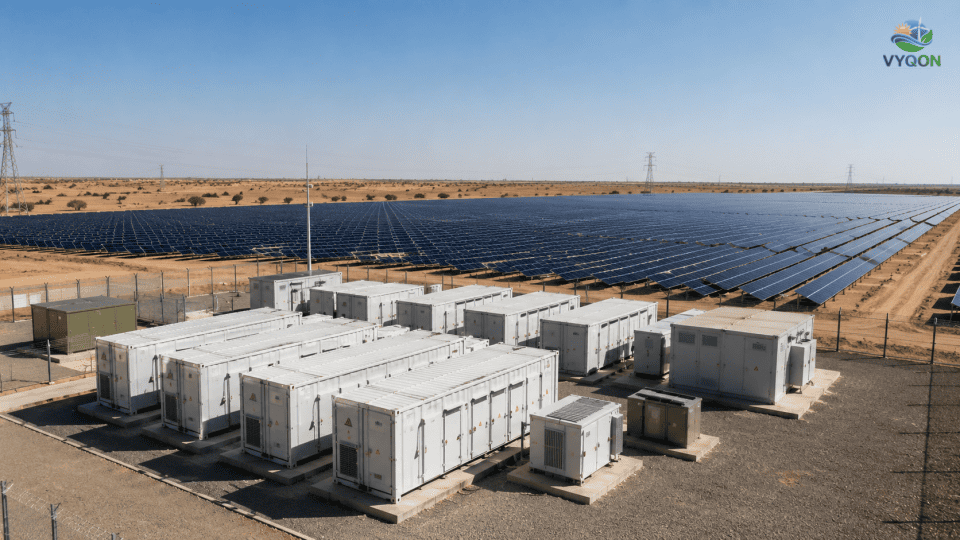
ACME Solar Holdings Ltd has secured ₹34.04 billion in financing from the Power Finance Corporation (PFC) for the development of its 250 MW Firm and Dispatchable Renewable Energy (FDRE) project. This transaction, tied to specific special purpose vehicles in the under-construction pipeline such as ACME URJA One_Phase 2 or ACME Renewtech Fifth Pvt. Ltd., brings the company’s total funds raised in the 2027 fiscal year to ₹60.51 billion. As the sole lender for this facility, PFC’s commitment serves as a cornerstone of ACME’s well-funded pipeline, with debt now tied up for nearly the entire FY 2027 build-out.
Key Deal Terms and Financial Highlights
The financing agreement establishes PFC as the sole lender for the ₹34.04 billion project loan. This latest capital mobilization brings ACME’s cumulative funding for FY 2027 to ₹60.51 billion. Revenue for the project is underpinned by a standard 25-year Power Purchase Agreement (PPA) with fixed tariffs, a structure designed to ensure long-term cash flow stability and mitigate demand risk.
Based on nodal agency data for ACME’s under-construction FDRE projects, average fixed tariffs for these assets typically range between ₹4.33/kWh and ₹4.73/kWh. These rates are materially above recent solar-only tariffs, which have ranged between ₹2.4/kWh and ₹2.8/kWh, reflecting the premium associated with dispatchable, round-the-clock renewable energy.
Technical Configuration and Project Scope
The 250 MW project utilizes an integrated hybrid architecture to meet dispatchable energy requirements. The configuration and physical status include:
- Project Type: Firm and Dispatchable Renewable Energy (FDRE) utilizing a multi-component hybrid of Solar, Wind, and Battery Energy Storage Systems (BESS).
- Geographic Footprint: Project assets are distributed across high-irradiation and high-wind regions in Rajasthan and Gujarat.
- Infrastructure Status: Land acquisition is executed by a specialized in-house team that has secured or leased more than 25,000 acres across 12 states. Grid connectivity is established via Inter-State Transmission System (ISTS) and Central Transmission Utility (CTU) connections.
- Value Engineering: To mitigate module cost inflation and optimize performance, ACME’s in-house EPC team employs value engineering techniques, including higher DC/AC ratios and the use of bifacial modules.
- Execution Timeline: The project is part of the 1.5 GW capacity scale-up targeted for the FY 2027–2028 execution cycle.
ACME Solar Operational Portfolio and BESS Footprint
ACME Solar ranks among the top 10 renewable energy independent power producers (IPPs) in India by operational capacity. The company utilizes an integrated in-house model to manage the full project lifecycle, including Engineering, Procurement, and Construction (EPC) and Operations and Maintenance (O&M).
| Capacity Category | Total Capacity |
| Operational Capacity | 2,974 MW |
| Under-Construction/Development | 5.1 GW |
The company is executing a strategic shift toward battery-integrated solutions:
- Storage Target: ACME aims to commission 10 GWh of battery storage capacity by 2027.
- Current Commissioning Status: As of the current cycle, 481 MWh of BESS has been commissioned.
- Accelerated Commissioning: The immediate target for Q4 FY26 has been revised up to 2 GWh (from an earlier 1 GWh expectation).
- BESS Monetization: ACME is fast-tracking BESS installation at existing operational sites to monetize available transmission capacity. This co-location strategy avoids incremental transmission capex, saving approximately ₹2 million per MW.
Counterparty and Offtake Profile
To minimize revenue volatility and counterparty risk, ACME Solar has shifted its portfolio toward central nodal agencies such as SECI, NTPC, SJVN, and NHPC. Approximately 83% of the total portfolio—comprising both operational and under-construction assets—is now contracted with these central offtakers.
This de-risking strategy, moving away from state distribution companies (DISCOMs), has resulted in a marked improvement in the company’s collection cycle. The “Days of Sales Outstanding” (DSO) has decreased from 181 days in FY23 to 23 days as of Q3 FY26, supporting the company’s overall cash flow sustainability.
Based on the information provided in the sources, here is a list of the official corporate and regulatory sources, including company websites and financial filings, that you can use for your citations:
Official Sources & References
- ACME Solar Holdings Ltd. (Official Website): www.acmesolar.in
- Power Finance Corporation (Official Website): www.pfcindia.co.in
- Securities and Exchange Board of India (SEBI) – ACME Solar Red Herring Prospectus (RHP): SEBI Filing – Oct 2024
- Securities and Exchange Board of India (SEBI) – ACME Solar Prospectus: SEBI Filing – Nov 2024
- BSE India – ACME Solar Holdings Stock Profile: BSE: 544283
- NSE India – ACME Solar Holdings Stock Profile: NSE: ACMESOLAR
- ICRA Limited – ACME Solar Credit Rating Rationale: ICRA Rating Update
- ACME Solar Q1 FY27 Earnings Call Recording: Official Audio Recording
Leave a Comment