
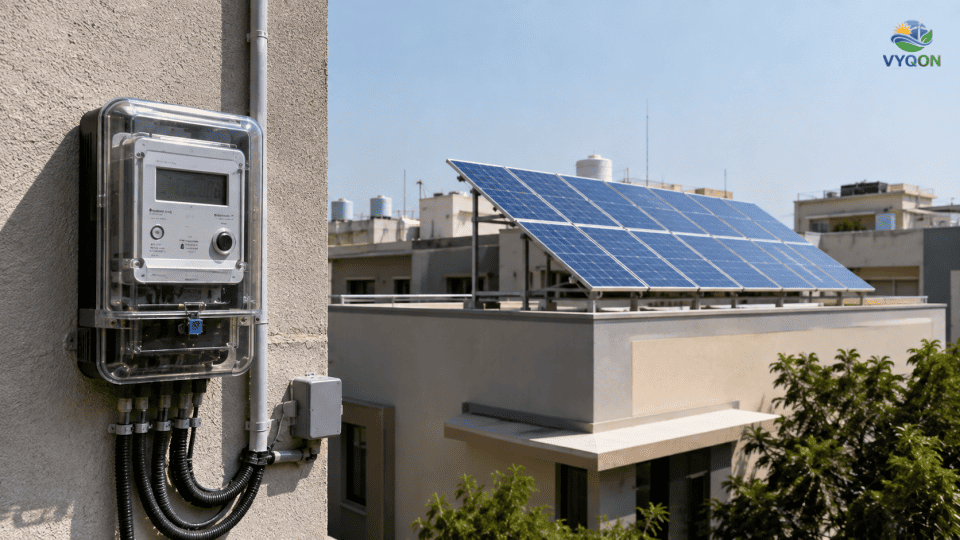
The Ministry of New and Renewable Energy (MNRE) formally acknowledged on July 29, 2026, that it has received a significant volume of complaints regarding incorrect electricity billing for households equipped with rooftop solar systems. These discrepancies have surfaced as the “PM Surya Ghar: Muft Bijli Yojana” scales nationally, moving beyond early adopters to a massive consumer base. Investigative analysis of ministerial communications indicates that the primary constraint for the program has shifted from federal funding to the execution capacity of individual distribution utilities. In response, the MNRE is referring individual cases directly to state power distribution companies (DISCOMs), emphasizing that the resolution of these administrative and technical errors falls under the exclusive jurisdiction of state-managed entities.
Analysis of the Core Billing Discrepancies
The surge in grievances highlights a systemic friction at the DISCOM interface. While the central financial architecture for subsidy disbursement remains functional, the “consumer-facing plumbing” of the grid has struggled to keep pace with the installation rate. The primary friction points identified in recent regulatory filings include:
- Net Metering Accounting Failures: Discrepancies in reflecting exported solar energy units (kWh) in monthly consumer bills.
- Surplus Energy Valuation Errors: Failure to accurately credit the monetary value of electricity exported to the grid under net-billing or net-metering frameworks.
- Arbitrary Application Rejections: Evidence of DISCOMs stalling or rejecting solar applications based on minor technical variations. To mitigate this, the MNRE has recently permitted a 10% variation in installed module capacity versus the applied capacity to prevent utilities from bottlenecking valid installations.
- Verification Latency: Significant delays in DISCOM-led inspections and the physical commissioning of bi-directional meters.
Defined Metering Frameworks Under Indian Regulations
Under the “Electricity (Rights of Consumers) Amendment Rules, 2021,” the Indian power sector operates under three distinct metering mechanisms. These frameworks dictate how generated solar energy is valued against grid imports.
| Metering Mechanism | Accounting and Tariff Valuation Methodology |
| Gross-metering | Total generation and total consumption are accounted for separately. Consumption is billed at the retail tariff; total generation is valued at a feed-in tariff determined by the State Commission. |
| Net-billing (Net Feed-in) | Utilizes a single bidirectional meter. Imported energy is valued at the retail tariff, while exported energy is valued at a specific feed-in tariff. The monetary value of the export is deducted from the import value to determine the net bill. |
| Net-metering | Utilizes a single bidirectional meter. Exported units (kWh) are directly deducted from imported units (kWh) to arrive at a net energy total, which is then billed or credited based on the applicable retail tariff. |
Recent Regulatory Actions and Escalation Protocols
To maintain the integrity of the national transition to renewable energy, the MNRE and the Ministry of Power have established formal protocols for vendor accountability and institutional grievance redressal.
- Vendor Standard Operating Procedure (June 22, 2026): This SOP establishes a graded, time-bound mechanism for complaints against registered vendors. It mandates an eight-day initial response window, followed by a seven-day reminder. If unresolved after the 15-day period, a Show Cause Notice is issued, leading to vendor deactivation from the national portal within 30 days.
- Mandatory Automatic Bill Reviews: Under the 2026 regulatory framework, a new provision mandates an automatic review of anomalous bills—specifically those showing consumption exceeding five times or falling below one-fifth of the six-month average. This mandate is supported by the deployment of 5.8 crore smart meters as of early 2026, enabling real-time data verification.
- Two-Tier Redressal Mechanism:
- Level 1: The Consumer Grievance Redressal Forum (CGRF) must decide on complaints within a 45-day window.
- Level 2: Aggrieved consumers may appeal to the Electricity Ombudsman, who is mandated to pass a final order within 90 days.
Current Implementation Status and National Scale
The scale of the PM Surya Ghar initiative has placed unprecedented pressure on DISCOM administrative infrastructure. As of late July 2026, the program reflects the following national statistics:
- Installations: 39.38 lakh rooftop systems completed as of July 20.
- Capacity: Cumulative rooftop solar capacity reaching approximately 14.07 GW.
- Disbursements: Rs 27,323 crore in Central Financial Assistance (CFA) released by the federal government.
- International Financing: An $890 million World Bank package approved on July 9, designed to catalyze an additional $4.2 billion in private sector investment across the solar value chain.
Institutional Responsibilities and Procedural Outlook
The resolution of billing disputes requires a clear division of labor between central monitoring and state-level execution. Because electricity distribution is a state-managed utility function, DISCOMs hold the sole legal responsibility for investigating and correcting net-metering errors.
While the MNRE serves as the National Monitoring Body, it holds no legal jurisdiction over individual bill corrections or local utility accounting. The ministry’s role is restricted to coordinating with state-level entities to ensure that grievances referred to them are addressed. As the program advances toward its target of one crore households by FY27, the focus remains on synchronizing DISCOM execution capacity with the federal financial incentives already in place.
Official Government Sources and Portals
- Ministry of Power, Government of India. “Electricity (Rights of Consumers) Amendment Rules, 2021.” Published in The Gazette of India: Extraordinary, Part II—Section 3—Sub-section (i), No. 360. June 29, 2021.,,.
- National Portal for Rooftop Solar — PM Surya Ghar. The official platform for registration, tracking application status, submitting bank details for subsidy (DBT), and raising grievances under the PM Surya Ghar Muft Bijli Yojana. pmsuryaghar.gov.in,.
- Ministry of New and Renewable Energy (MNRE). The central ministry providing scheme information, technical guidelines, and official notifications for rooftop solar implementation in India. mnre.gov.in.
- CPGRAMS (Centralized Public Grievance Redress and Monitoring System). The central government portal used to escalate grievances against public authorities or DISCOMs when initial complaints remain unresolved. pgportal.gov.in,.
- National Consumer Helpline (Bhartiya Grahak Sahayata Kendra). A dedicated service for filing complaints against private vendors who fail to deliver services or equipment after receiving payment. Call: 1915. consumerhelpline.gov.in,.
- e-Daakhil Portal. The official digital platform for filing consumer commission complaints online against solar vendors or service providers. e-jagriti.gov.in,.
- Ministry of Power, Government of India. “Draft Electricity (Rights of Consumers) Amendment Rules, 2026.” (Notification issued on 12 March 2026 for stakeholder comments)..
Leave a Comment