
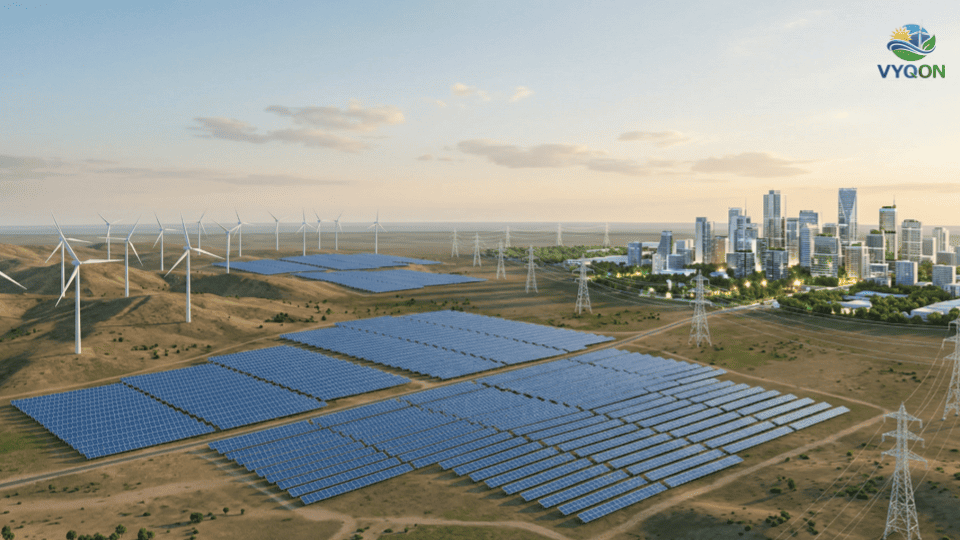
While solar is slated to dominate India’s 1,121 GW capacity mix by 2036 with a 45% share, coal will maintain its role as the system’s structural backbone, contributing 51% of gross generation despite its capacity share receding to 28%.
National Capacity Projections and Resource Mix
The National Generation Adequacy Plan (NGAP) for FY2027–FY2036 mandates a structural pivot in India’s power architecture. To ensure system adequacy against rising demand, the Central Electricity Authority (CEA) projects a base-case installed capacity of 1,121 GW by the end of FY2036. The anticipated resource mix is as follows:
- Solar: 509 GW
- Coal: 315 GW
- Wind: 155 GW
- Large Hydro: 78 GW
- Nuclear: 22 GW
- Gas: 20 GW
- Biomass: 16 GW
- Small Hydro: 6 GW
Analytical Insight: We are witnessing a “Generation vs. Capacity Paradox.” Although Variable and Intermittent Renewable Energy (VRES) will constitute the majority of new capacity, coal remains the primary energy producer, forecasted to generate 1,819 BU (51% of gross generation). Under a lower-demand sensitivity scenario, the total capacity requirement may be adjusted downward to 1,054 GW.
Growth of Non-Fossil Fuel Share
The energy transition is accelerating toward a high-VRES grid, significantly altering the ratio between thermal and renewable assets.
- Total projected non-fossil fuel-based capacity is expected to reach 786 GW.
- This represents approximately 70% of the total installed capacity by FY2036, up from the 50% threshold achieved in July 2025.
- Fossil fuel-based generation is projected to undergo a steep decline in the total energy mix, dropping from the current 75% to approximately 50% by the end of the projection period.
Energy Storage and Grid Flexibility
Integrating nearly 664 GW of combined solar and wind requires a massive expansion of energy storage and a fundamental shift in thermal plant operations.
- Total Storage Requirement:174 GW (888 GWh) by FY2036.
- Pumped Storage Projects (PSP): 94 GW
- Battery Energy Storage Systems (BESS): 80 GW
- Storage Duration Nuance: Sizing is predicated on a 6-hour continuous discharge requirement to manage evening peaks and non-solar periods.
- Grid Reliability: A Planning Reserve Margin (PRM) of 13–14% is essential to maintain system adequacy.
- Coal Flexibility: While resource adequacy studies assume a 55% minimum operating limit, a CEA committee has recommended a more aggressive shift to a 40% minimum technical load and the adoption of two-shift operations to accommodate VRES volatility.
Projected Electricity Demand and Energy Requirements
The necessitated capacity expansion is driven by a peak demand forecast of 459 GW by FY2036 (base case), representing a CAGR of 5.58%.
- Energy Requirements: Total yearly requirements are projected to reach between 3,365 BU and 3,450 BU.
- Growth Divergence: The CAGR for energy requirements (6.41%) outpaces peak demand growth, a trend attributed to high-utilization emerging loads such as electric vehicles and green hydrogen production.
- Geographic Concentration: Market participants should note that over 50% of national peak demand is concentrated in seven states: Maharashtra, Uttar Pradesh, Gujarat, Rajasthan, Madhya Pradesh, Tamil Nadu, and Karnataka.
Status of Current and Planned Projects
India’s current project pipeline demonstrates a heavy tilt toward VRES and long-duration storage. The status of projects as of early 2026 is summarized below:
| Resource Type | Under Construction | Under Tendering / Planned |
| Thermal (Coal/Gas) | 41 GW | 22.4 GW (to be taken up) |
| Variable RE (VRES) | 155 GW | 48 GW (tendering) / 134 GW (GEC-III) |
| Nuclear | 6.6 GW | 7 GW (planning/approval) |
| PSP (Storage) | 13 GW | 9.5 GW (advanced planning) |
| BESS (Storage) | 10.7 GW | 22 GW (tendering) |
This robust pipeline is supported by the Green Energy Corridor (Phase III) Scheme and the national roadmap to achieve 100 GW of PSP capacity by 2036 through accelerated clearances and private sector incentives.
Leave a Comment