
The Global Pivot to Renewables
Renewable energy is on the verge of dethroning coal as the world’s primary electricity source. According to the International Energy Agency’s (IEA) Electricity Mid-Year Update 2026, global renewable generation is set to overtake coal next year, shatttering records with a forecast growth of 8% in 2026 and 9% in 2027. This structural shift comes as India’s electricity market undergoes a violent recovery; the Paris-based autonomous organization reports that India’s annual demand is poised to rebound to 7% in 2026, a sharp correction from the subdued 1.6% growth recorded in 2025.
Global Outlook: Renewables Overtaking Coal
The global power mix is witnessing a decisive transition as clean energy claims a dominant market share.
- Market Share Expansion: Renewables are projected to rise from a 33% share of the global electricity mix in 2025 to 37% by 2027.
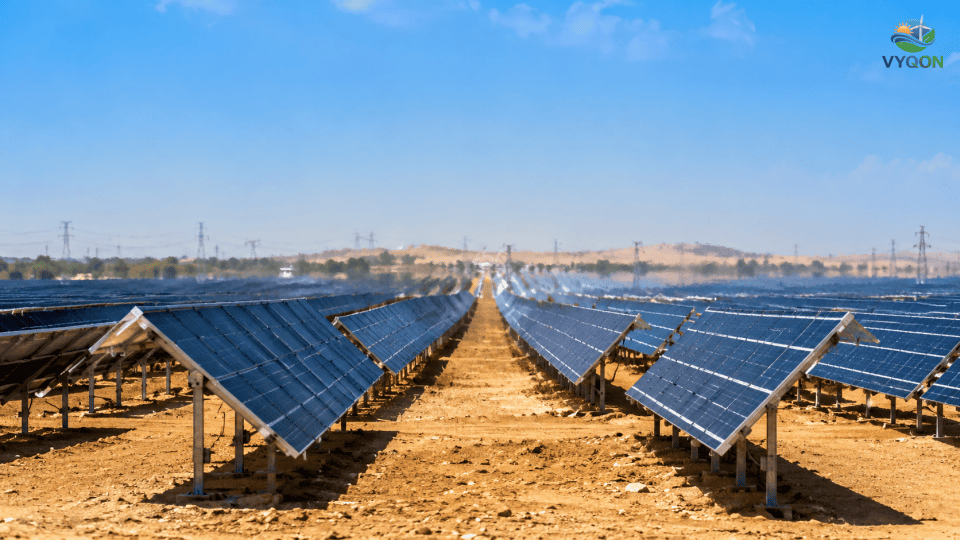
- Solar PV Surges Ahead: Solar photovoltaic generation remains the juggernaut of this transition, forecast to increase by 23% (610 TWh) in 2026. For the first time, solar will surpass wind to become the world’s second-largest renewable source, trailing only hydropower.
- Stagnation and Nuclear Growth: Global gas-fired generation is expected to remain flat in 2026, ending a decade of expansion. Conversely, nuclear power is accelerating, supported by new reactors in China and India, alongside strong output in France and the United States.
India’s Market Rebound: Demand Drivers and Peak Loads
While the annual forecast sits at 7%, India’s grid faced an immediate crisis during the April–June 2026 period, where peak demand surged by a staggering 12%. This quarterly spike pushed the system to its breaking point, driven by:
- Industrial and Service Acceleration: Robust economic activity across manufacturing and service hubs.
- The Cooling Crisis: Severe heatwaves intensified by El Niño conditions forced an unprecedented reliance on air conditioning.
- Record Breaking Peaks: India successfully met an all-time high peak load of 270.8 GW in May 2026.
Despite the green surge, coal-fired generation rose 3.5% to bridge the gap during non-solar peak hours, as thermal power provided approximately 75% of the supply during evening peaks.
India’s Solar and Wind Performance Milestones
India’s renewable sector hit historic supply marks in the first half (H1) of 2026, though a distinction remains between total renewable share and variable sources.
- VRE Supply Share: The combined share of solar-plus-wind (Variable Renewable Energy) in total power supply rose to 16.5%, up from 14% year-on-year. When including large hydro and nuclear, the total non-fossil share in supply reached a record 42.79%.
- Solar Velocity: Solar generation alone expanded by over 30% during H1 2026.
- Instantaneous Peaks: In July 2026, VRE generation touched a record instantaneous milestone of 103.7 GW, comprising 75 GW of solar and approximately 28 GW of wind.
- Capacity Status: Cumulative solar PV capacity reached 150.26 GW by March 2026.
The Infrastructure Gap: Transmission Bottlenecks and Curtailment
The transition is currently being choked by a massive execution deficit. Renewable projects are commissioned in 12–18 months, but the high-voltage transmission lines required to evacuate that power take 36–60 months to build.
Curtailment and Grid Connectivity Data
This mismatch is creating a “wasted energy” crisis that threatens the financial viability of the sector:
- Massive Power Waste: In Q1 FY2026–27 alone, 8,133 GWh of solar power was curtailed. In the heat of May, an average of 24 GWh of solar energy was wasted daily.
- Grid Limbo (T-GNA): Approximately 21 GW (nearly 9%) of installed RE capacity relies on Temporary General Network Access. Of this, 12 GW faces active evacuation limits during peak solar hours.
- Regional Extremes: In Rajasthan’s solar hubs, curtailment has reached between 70% to 95% during peak afternoon hours.
- Financial & Systemic Risk: The “backing down” of power has created an imminent risk of projects becoming Non-Performing Assets (NPAs). For instance, a 300 MW plant forced to generate at only 10 MW cannot service its debt. This places a systemic burden on public financial institutions (PFC, REC, and IREDA), which have an exposure of ₹5.08 lakh crore to the RE sector.
Sectoral Drivers: EVs, Data Centers, and Industry
Technological shifts and geopolitical disruptions are reshaping the demand landscape.
- The Battery Boom: In Asia, the EV charging network continues to swell, with China’s infrastructure crossing 22 million units by May. China also reported a 39.3% year-on-year increase in lithium-ion battery output in H1 2026.
- Consumption Drivers: Data centers, modern appliances, and industrial electric vehicles are now permanent fixtures of high-load profiles.
- The LNG Shock: India’s gas-fired generation plummeted 15% in H1 2026. High prices and supply disruptions in the Strait of Hormuz severely restricted the flow of Liquefied Natural Gas (LNG), forcing industry to seek alternatives.
Strategic Targets and Capacity Additions
India is moving toward its climate targets at a pace that exceeds its original roadmap, even as coal remains the national baseline.
- Non-Fossil Footprint: Total non-fossil fuel capacity stood at 283.46 GW as of March 2026.
- Target Revisions: India achieved 50% of its 2030 target of 500 GW five years early. Consequently, the 2035 target has been raised to 60% of total capacity.
- The Persistent Baseline: Despite these gains, coal remains the primary source of generation, holding a 67.7% share of the electricity mix through March 2026. Persistent evacuation bottlenecks must be resolved if the country is to safeguard its 500 GW clean energy ambitions.
Official Sources
- International Energy Agency (IEA): Electricity Mid-Year Update 2026
- Ministry of New and Renewable Energy (MNRE): Official Website and Renewable Energy Data
- Central Electricity Authority (CEA): Installed Capacity and Generation Reports
- Press Information Bureau (PIB): Power Generation Statistics Release
- Press Information Bureau (PIB): Distribution Sector Performance Update
- Ministry of Power, Government of India: Parliamentary Responses on Peak Demand
Leave a Comment