
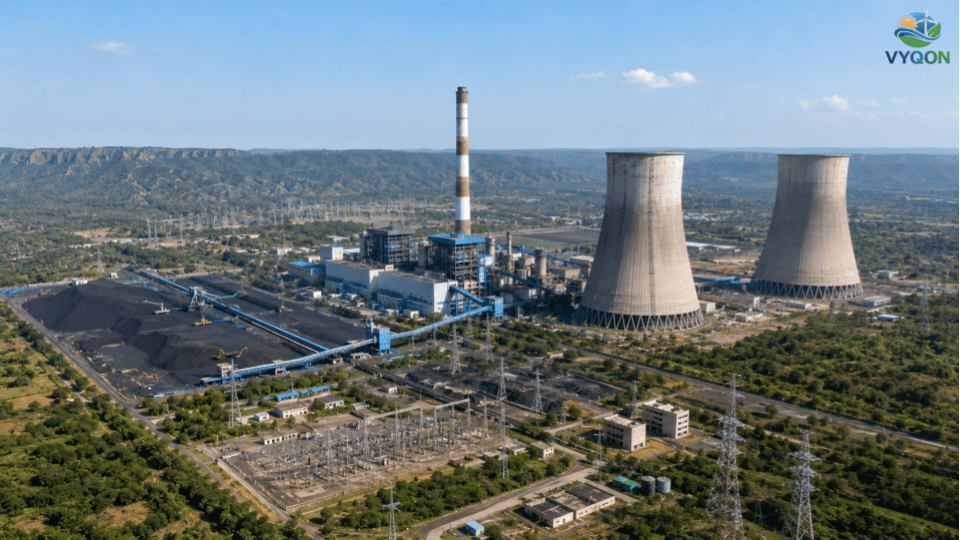
MP Power Management Company Limited (MPPMCL) and Hindustan Power, through its subsidiary Anuppur Powerprojects Private Limited, have formally executed a Power Supply Agreement (PSA) for the long-term delivery of 800 MW of electricity. Hindustan Power secured the contract as the L-1 bidder in a competitive procurement process, outperforming other major private developers. The power will be generated from an upcoming unit at the company’s Greenfield Phase II expansion site in Anuppur, Madhya Pradesh. The specific project footprint encompasses the villages of Jaithari, Amagavan, Laharpur, Murram, Guwari, and Beliya.
Technical and Contractual Framework
The agreement is structured under a long-term utility framework designed to support Madhya Pradesh’s grid stability. Key technical and contractual specifications include:
- Model: The project was awarded under the Design, Build, Finance, Own, and Operate (DBFOO) framework.
- Technology: The facility will utilize advanced ultra-supercritical technology. Due to specific OEM constraints for these high-efficiency units, the MPERC has approved a technical deviation allowing for a 12-hour ramp-up period (increased from the standard 8 hours).
- Tenure: The agreement carries a 25-year duration, with an optional provision for a 5-year extension.
- Timeline: The commencement of power supply is scheduled for 2031.
- Tariff Data: As per the MPERC regulatory filings for Petition No. 121 of 2025, the discovered tariff is Rs. 5.818/kWh. This rate is composed of a fixed charge of 424.5 Paise/kWh and a fuel charge of 157.3 Paise/kWh.
Strategic Context and Project Infrastructure
The project is a vital component of MPPMCL’s strategic effort to bridge a projected energy deficit, as state electricity demand is rising at a CAGR of 5.36%. This 800 MW unit is part of a wider state procurement of 3,200 MW of new thermal capacity. While the original tender included an 800 MW Greenshoe option, Hindustan Power (as the L-1 bidder) declined the additional capacity, which was subsequently awarded to Adani Power.
Infrastructure development for the project includes significant transmission works identified in the 42nd CMETS-WR agenda. Power evacuation will be managed via a 50km high-capacity 400kV DCDS (Quad Moose) line. This line will connect the Hindustan Power switchyard directly to the Shahdol (STU) Pooling Station, integrating the new capacity into the State Transmission Utility (STU) network.
Official Executive Statements
Chairman Ratul Puri stated that the agreement marks a significant milestone in the expansion strategy of Hindustan Power. According to the company chairman, the deal underscores the critical necessity of “dependable baseload power” to sustain India’s economic and industrial growth.
Chairman Ratul Puri further remarked that the project is expected to support regional economic impact, foster local employment, and bolster long-term energy security across Madhya Pradesh. He noted that the PSA reflects the company’s commitment to delivering large-scale, efficient infrastructure to meet the state’s evolving energy needs.
Regulatory and Environmental Status
The project has cleared essential regulatory hurdles required for the Phase II expansion:
- Environmental Clearance: The Ministry of Environment, Forest and Climate Change (MoEF) has granted environmental clearance for the Phase II expansion at Anuppur, which is designed for a total capacity of 1,600 MW (2×800 MW). The current PSA covers the first of these two units.
- Tariff Adoption: The Madhya Pradesh Electricity Regulatory Commission (MPERC) issued a formal order on December 15, 2025, under Petition No. 121 of 2025, adopting the tariff determined through the transparent competitive bidding process.
- Fuel Supply: Coal for the 25-year tenure is secured through allocations under the SHAKTI Policy, ensuring fuel price transparency via the pass-through mechanism established in the PSA.
Leave a Comment