
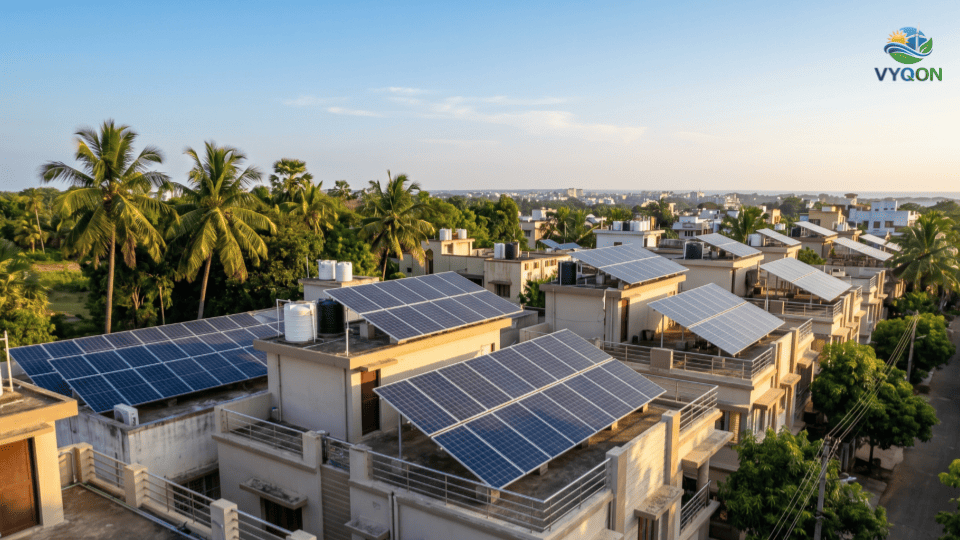
The Odisha Electricity Regulatory Commission (OERC) has notified the draft framework titled ‘OERC (Renewable Consumption Obligation, Distributed Renewable Energy Sources and Renewable Energy Linked Concepts) Regulations, 2026.’ This landmark notification signals a structural pivot from an “expansion-only” era to a regime of “disciplined grid management,” aligning Odisha with the strategic objectives of the Draft National Electricity Policy 2026.
Mandatory Renewable Consumption Obligation (RCO) Trajectory
The OERC has established an aggressive, phased escalation of RCO targets to accelerate decarbonization. This trajectory mandates that obligated entities significantly increase their green energy procurement over the next five fiscal years.
| Fiscal Year | Mandatory RCO Target (%) |
| 2024–25 | 29.91% |
| 2025–26 | 33.01% |
| 2026–27 | 35.95% |
| 2027–28 | 38.81% |
| 2028–29 | 41.36% |
| 2029–30 | 43.33% |
Analyst Perspective: These targets represent more than simple growth; they align Odisha with national climate goals and will necessitate a massive surge in procurement. Notably, the hydro obligation criteria now include projects located outside India (international projects), implying that the Commission may allow RCO credits for imported green power—a major strategic opening for cross-border energy trade.
- Wind Obligations: Specifically apply to projects commissioned after March 31, 2024.
- Hydro Obligations: Encompass pumped-storage and small hydro projects.
Distributed Renewable Energy Systems (DRES) & Mandatory BESS
The framework defines Distributed Renewable Energy Systems (DRES) as installations with a capacity of up to 10 MW, connected at the 33 kV level or below. In a significant regulatory shift, the OERC has introduced mandatory Battery Energy Storage System (BESS) requirements to ensure grid stability and “firm up” intermittent distributed generation.
| System Capacity | Minimum Storage Requirement |
| 5 kW to 10 kW systems | 1 kWh |
| 7 MW to 10 MW systems | 2,800 kWh |
Note: Storage requirements are scaled proportionally to system capacity within these defined brackets.
Compliance Alert: To prevent these systems from being used for arbitrage of non-renewable power, the regulations enforce an operational compliance rule: at least 85% of the energy stored in these BESS units must be derived from renewable sources.
Emerging Frameworks and Advanced Energy Concepts
The regulations formalize several emerging energy concepts designed to create new revenue streams for DRES-scale projects (under 10 MW). These frameworks prioritize the integration of distributed energy into the broader grid architecture:
- Virtual Power Plants (VPP): Systems that aggregate various distributed energy resources to operate and be dispatched as a single, coordinated utility-scale power plant.
- Vehicle-to-Grid (V2G) Systems: Bi-directional technology allowing electric vehicle batteries to interact with the grid, providing discharging capabilities to support peak shaving.
- Agrivoltaics: A dual-land-use strategy that enables the simultaneous production of solar energy and agricultural crops on the same parcel of land.
Technical Constraints and Interconnection Standards
For developers and EPCs, the draft introduces strict technical boundaries that will dictate project siting and bankability.
Metering Mechanisms: The regulation provides a comprehensive suite of six distinct metering options to ensure maximum flexibility for Commercial & Industrial (C&I) and residential developers:
- Net Metering
- Gross Metering
- Virtual Net Metering
- Three additional regulatory-approved mechanisms designed to ensure total flexibility for diverse project configurations.
Grid Interconnection Limits:
- Transformer Saturation (Red-Flag Constraint): Total DRES capacity connected to a single transformer cannot exceed 90% of its rated capacity. This is a critical siting constraint; developers must prioritize early-stage feasibility studies as high-penetration zones will reach “hard limits” quickly.
- Voltage Level Cap: Interconnection at the 33 kV level or below is strictly capped at a 10 MW aggregate capacity.
Stakeholder Submission Deadline
The OERC is currently accepting feedback from stakeholders, including developers, EPC contractors, and analysts, regarding these draft regulations.
Final date for public comment submission: May 8, 2026.
Leave a Comment