
The Green Hydrogen Imperative
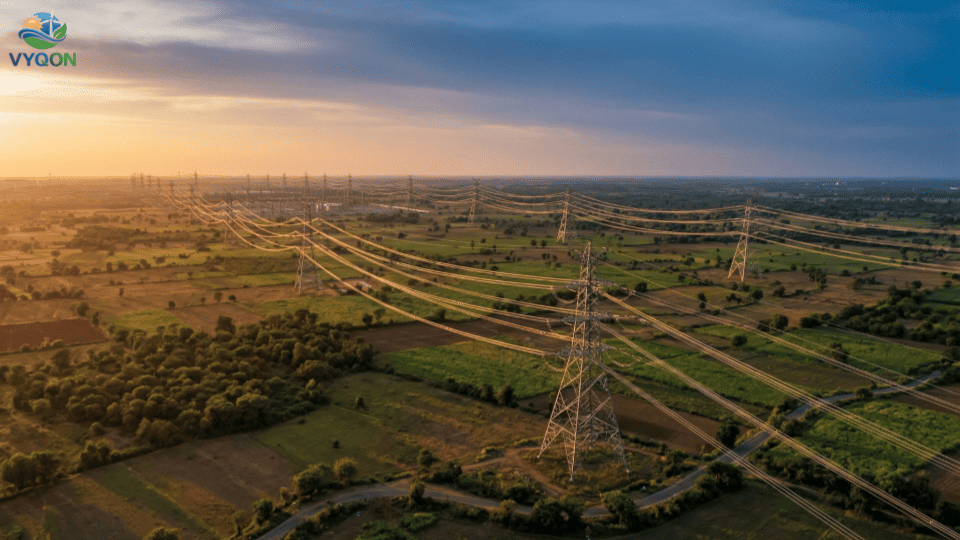
India’s National Green Hydrogen Mission (NGHM) represents a tectonic shift in the global energy landscape, targeting a production capacity of 5 million metric tonnes per annum (MMTPA) by 2030. However, the mission’s success hinges less on chemical synthesis than on high-density power delivery. In Andhra Pradesh, the transition from policy to physical reality is manifesting through a 765 kV transmission backbone—an “umbilical cord” designed to bridge renewable-rich hinterlands with the energy-intensive industrial clusters of Visakhapatnam and Kakinada.
This ultra-high voltage (UHV) infrastructure is engineered to evacuate 5 GW of dedicated power specifically for green hydrogen and green ammonia projects. By deploying the highest commercial voltage class in India, the system ensures that the electrochemical requirements of massive electrolyser arrays are met with minimal transmission losses and maximum reliability.
The Procurement Landscape: Tenders, Portals, and Reference Numbers
The Power Grid Corporation of India Limited (POWERGRID) has moved aggressively into the procurement phase, utilizing a “pre-bid tie-up” model. This strategic maneuver allows POWERGRID to secure technical and commercial partners for construction and equipment supply before competing in the final Tariff-Based Competitive Bidding (TBCB) auctions managed by the Bid Process Coordinator.
- Main Tender Reference: The core procurement activity is cataloged under reference number CC/T/W-TW/DOM/A02/26/04032.
- Package Segmentation: The project is stratified into multiple packages, notably TL01 through TL06, covering 765 kV double-circuit (D/C) lines and associated substation extensions.
- Digital Interface: Mandatory bid submission and procurement workflows are centralized through the PRANIT portal, POWERGRID’s proprietary e-tendering platform.
- Strategic Deadlines: The industry is currently tracking a critical window for bid openings, specifically highlighted for April 6–7, 2026.
- Tender Portal: https://www.powergrid.in/tenders
Technical Architecture of a 765 kV Backbone
From a power systems perspective, 765 kV technology was selected over 400 kV or lower classes due to its superior power density and reduced Right-of-Way (RoW) footprint. To maintain thermal stability and current-carrying capacity under continuous industrial loads, the project specifies the use of AL59 Zebra and Moose conductors, which are optimized for high conductivity and superior sag-tension characteristics.
Resilience and Reactive Power Compensation
The coastal proximity of these nodes necessitates advanced protection against saline corrosion and flashovers. Consequently, the project employs Gas Insulated Substation (GIS) technology at both Pendurthi and Khammam-II. The Pendurthi GIS features a massive transformation capacity of 6000 MVA (4×1500 MVA), while Khammam-II is configured for 4500 MVA (3×1500 MVA).
To manage the volatility of electrolyser loads and the Ferranti effect on long UHV lines, the system incorporates a sophisticated reactive power solution. This includes a 300 MVAr STATCOM for rapid dynamic voltage support at Pendurthi, working in tandem with 2×125 MVAr Mechanically Switched Capacitors (MSC). Voltage regulation is further fortified by 330 MVAr switchable line reactors at the ends of the major 765 kV circuits.
The Industrial Anchors: Pudimadaka and Kakinada Hubs
The economic viability of this infrastructure is anchored by two “Green Hydrogen Valleys” that serve as the primary demand centers.
The Kakinada hub is specifically positioned as an export powerhouse. Through a strategic partnership with the Port of Rotterdam, the complex aims to supply green ammonia to the European market. To ensure bankability, the production and infrastructure are being aligned with rigorous EU RED III and RFNBO standards, which mandate strict carbon-intensity monitoring for “Renewable Fuels of Non-Biological Origin.”
Institutional Framework and Bidding Requirements
The project is being executed under the Build, Own, Operate, and Transfer (BOOT) framework. While POWERGRID conducts pre-bid tie-ups, the overarching selection of the Transmission Service Provider (TSP) is managed by REC Power Development and Consultancy Limited (RECPDCL) as the Bid Process Coordinator (BPC) via the Tariff-Based Competitive Bidding (TBCB) model. To facilitate this, specific Special Purpose Vehicles (SPVs) have been incorporated, including Vizag Power Transmission Ltd and Kakinada I Transmission Ltd.
Bidders face stringent qualification thresholds:
- Financial: A minimum average annual turnover of INR 5.13 billion over the best three of the last five years.
- Technical: Proven experience as a prime contractor on at least one transmission project of 100 km or more involving 345 kV or higher voltage levels.
Challenges and Strategic Outlook
The Ministry of Power initially raised concerns regarding “stranded assets”—infrastructure built without guaranteed offtake. This risk was mitigated after the Central Transmission Utility (CTUIL) verified firm connectivity applications, most notably from NTPC Green Energy Ltd for 2,500 MW.
The strategic outlook is bolstered by the Green Energy Corridor (GEC) Phase III, an INR 28,033 crore proposal aimed at integrating 11 GW of solar and 7.4 GW of pumped hydro storage. This integration is vital for providing the round-the-clock (RTC) power required by electrolysers. Beyond energy security, these combined initiatives are projected to create over 8,000 jobs and significantly reduce regional transmission losses from 2.69% to 2.60%.
Call to Action: Expert Technical Due Diligence
Companies interested in participating in such high-capacity ISTS (Inter-State Transmission System) projects are encouraged to contact our consultancy for comprehensive technical due diligence, regulatory navigation, and bid advisory services to ensure compliance with the rigorous POWERGRID and RECPDCL standards.
Leave a Comment