
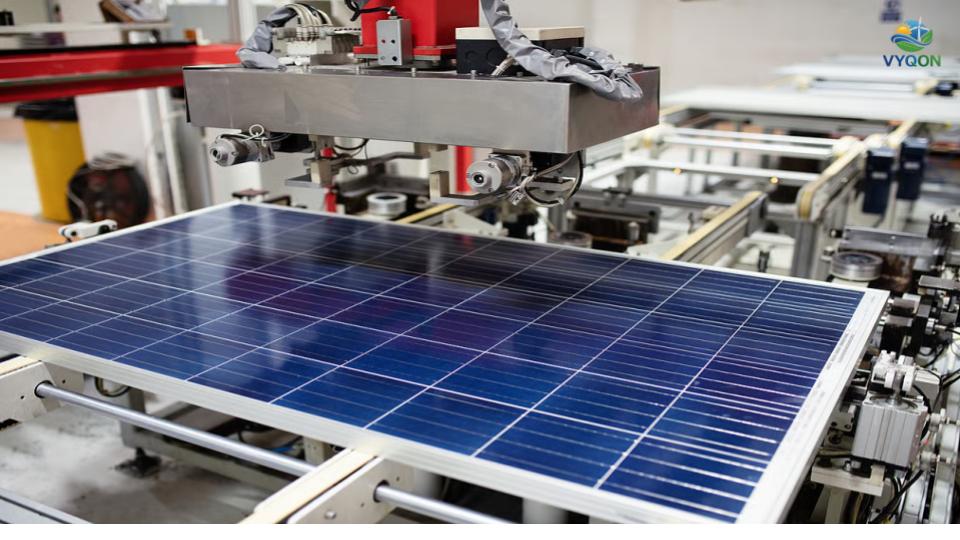
The landscape of India’s renewable energy manufacturing is undergoing a rapid, high-stakes transformation. As the nation pushes toward its ambitious net-zero targets and seeks to reduce dependence on imported photovoltaic (PV) components, domestic manufacturers are scaling up with unprecedented speed. A prime example of this momentum is the latest strategic move by Saatvik Solar (a subsidiary of Saatvik Green Energy Limited), which has officially unveiled plans for a major 3.6 GW solar cell manufacturing facility in the state of Odisha.
A Strategic Foothold in Gopalpur
The announcement centers on a Memorandum of Understanding (MoU) signed with the Industrial Promotion and Investment Corporation of Odisha Limited (IPICOL). This agreement is not just a business expansion; it represents a significant deepening of Odisha’s role as a burgeoning industrial hub for green energy.
The new facility will be located in the Gopalpur region of the Ganjam district. By selecting this site, Saatvik is leveraging the regional industrial ecosystem, positioning its manufacturing complex to become one of the most prominent solar hubs in Eastern India. The company has designated this project as “Phase II” of its broader master plan for the Gopalpur site, with commercial production tentatively slated to begin by the 2028 fiscal year.
The Foundation: Bridging Phase I to Phase II
To understand the significance of this 3.6 GW expansion, one must look at the foundation already laid. Saatvik’s presence in Odisha is anchored by a massive “Phase I” project that is currently in its final stages of completion. This initial phase includes:
- 2.4 GW of Solar Cell Manufacturing: Providing the core high-efficiency cells that form the heart of a solar module.
- 4 GW of Solar Module Manufacturing: A substantial capacity that positions Saatvik as a major supplier in the Indian solar market.
According to company leadership, the heavy lifting for Phase I is essentially complete. The site now boasts a dedicated 220 kV substation, ready for full-scale power operations. Currently, the technical teams are working through the final installation, testing, and validation phases. Most notably, the company is preparing for an ALMM-II (Approved List of Models and Manufacturers) inspection scheduled for September 2026—a critical regulatory hurdle that will allow them to supply modules for government-backed solar projects.
Why This Matters for India’s Energy Transition
The transition to renewable energy is often discussed in terms of “gigawatts installed,” but the real engine behind that growth is the manufacturing supply chain. For years, India relied heavily on imported solar cells and modules, which left developers vulnerable to price volatility and supply chain disruptions.
By building out an additional 3.6 GW of cell capacity, Saatvik is doing more than just increasing its own output; it is contributing to a domestic “self-reliance” model that is essential for three reasons:
- Supply Chain Security: Developing indigenous cell manufacturing capacity reduces the reliance on global supply chains that are often subject to geopolitical tensions and logistical bottlenecks.
- Cost Competitiveness: Domestic production, when scaled effectively, allows manufacturers to optimize the cost of finished modules, making solar power more affordable for local electricity distribution companies (DISCOMs) and residential consumers.
- Regional Economic Development: These projects are massive job creators. From highly skilled electrical and mechanical engineers to administrative and logistics support staff, the expansion in Ganjam is set to provide a significant boost to local employment and the secondary economy in Odisha.
The Road Ahead
Prashant Mathur, CEO of Saatvik Green Energy Limited, has emphasized that this expansion is a testament to the company’s “commitment to building manufacturing capabilities at scale.” As the global solar industry moves toward higher-efficiency technologies (such as N-type and TOPCon cells), the focus for manufacturers like Saatvik will be to ensure their new lines are future-proofed to handle these advanced technologies.
The timeline for the 3.6 GW facility—targeting operations by the 2028 fiscal year—aligns with the projected surge in demand as India races to meet its 2030 renewable energy targets.
As we look toward the next few years, the progress at the Gopalpur site will serve as a bellwether for the broader Indian solar manufacturing sector. For investors, industry analysts, and climate advocates alike, the transition from Phase I commissioning to Phase II construction will be a story to watch closely—a narrative of how industrial policy, private enterprise, and clean energy goals are converging to reshape India’s power sector from the ground up.
References :
Leave a Comment