
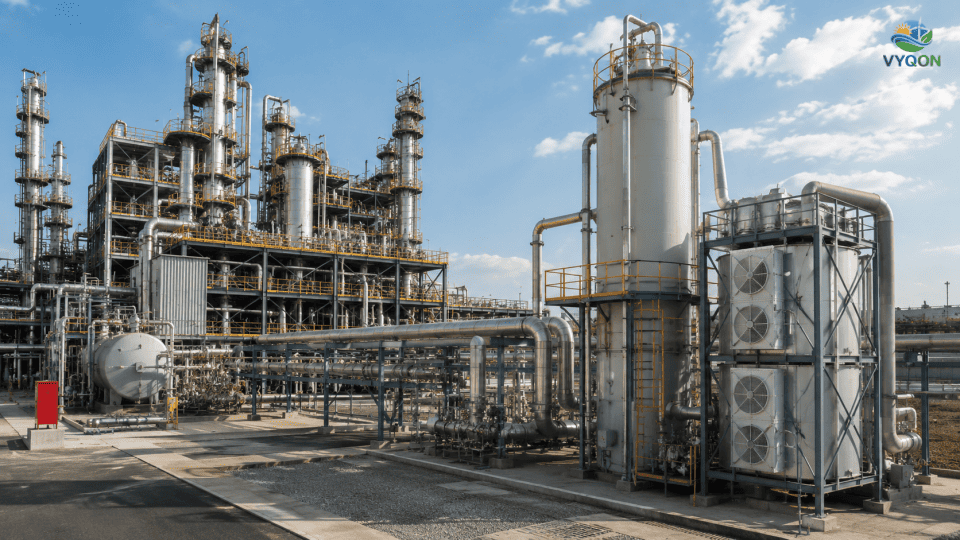
The Solar Energy Corporation of India (SECI) issued an Expression of Interest (EoI) on August 3, 2026, to identify and map the national landscape of carbon dioxide (CO2) suppliers. As the primary implementing agency for the National Green Hydrogen Mission, SECI intends to use this market consultation to facilitate the production of Green Urea for the domestic fertilizer sector and Renewable Fuels of Non-Biological Origin (RFNBO)-compliant Green Methanol for international and industrial markets. The initiative aims to reduce supply chain uncertainties by establishing a database of CO2 availability, quality, and logistics.
Key Tender Highlights and Deadlines
The EoI is a policy-shaping exercise and carries no financial commitment or procurement obligation at this stage. Administrative details are summarized below:
| Detail | Description |
| Tender ID | SECI000266 |
| Tender Reference No | SECI/C&P/EOI/17/0003/26-27 |
| Tender Type | Online (Market Consultation) |
| Financial Requirements | Not Applicable (No fees or financial instruments required) |
Critical administrative dates include:
- Tender Publication Date: August 3, 2026
- Pre-Bid/Pre-EoI Meeting: August 18, 2026 (14:30)
- Submission Deadline: September 17, 2026 (18:00)
The official links for the Solar Energy Corporation of India (SECI) Expression of Interest (EoI) regarding carbon dioxide (CO2) sourcing for Green Urea and Green Methanol production are as follows:
- Official EoI Document (PDF): https://www.seci.co.in/uploads/tenders/EOI-CO2_Sourcing_Green_Urea-Methanol.pdf
- SECI Tender Details Page: https://www.seci.co.in/tender-details/YmRx
- Pre-EoI Response Meeting Details: https://www.seci.co.in/uploads/tenders/corrigendums/Pre-EOI_response_meeting2.pdf
Key Information for Bidders:
- Tender ID: SECI000266
- Tender Reference No: SECI/C&P/EOI/17/0003/26-27
- Pre-Bid Meeting Date: 18 August 2026 at 14:30:00
- Bid Submission Deadline: 17 September 2026 at 18:00:00
Sourcing and Technical Requirements
SECI is evaluating CO2 availability from three distinct categories:
- Biogenic CO2: Sourced from distilleries, ethanol plants, biomass facilities, and biogas upgrading units.
- Direct Air Capture (DAC): CO2 extracted directly from the atmosphere.
- Industrial CO2 Emissions: Captured from hard-to-abate sectors including thermal power, cement, and steel plants.
Industrial Scale and Logistics
The magnitude of the sourcing challenge is dictated by industrial requirements: a world-scale urea plant with an annual capacity of 12.7 lakh metric tonnes (MT) requires approximately 10 lakh MT of CO2 feedstock. To optimize logistics, SECI has indicated a preference for CO2 sources located near existing operational urea plants or proposed greenfield sites.
RFNBO Compliance and Export Realities
For Green Methanol intended for export, compliance with the European Union’s Renewable Energy Directive (RED III) is essential. A significant hurdle for Indian heavy industry is that RED III requires fossil-based industrial CO2 to originate from installations covered by a recognized carbon pricing mechanism. Because India currently lacks an EU Emissions Trading System (ETS) equivalent, industrial fossil-based CO2 is currently restricted from the export-grade RFNBO market. Consequently, biogenic sources and DAC are the only currently viable paths for export-grade production.
Technical Benchmarks
The Ministry of New and Renewable Energy (MNRE) has established the following maximum emission thresholds for green hydrogen derivatives, calculated as a 12-month average:
| Product | Max Emission Threshold (kg CO2 eq/kg) |
| Green Ammonia | 0.38 |
| Green Methanol | 0.44 |
Operational and Policy Framework
The initiative utilizes technical foundations established by the NTPC Energy Technology Research Alliance (NETRA) and introduces new commercial mechanisms to bridge the cost gap between green and conventional commodities.
- The Vindhyachal Benchmark: Technical standards are based on the 150 Tonnes Per Day (TPD) Green Urea pilot plant at NTPC’s Vindhyachal Super Thermal Power Station. This facility, developed by NETRA, utilizes Carbon Clean’s CaptureX semi-modular technology to demonstrate the integration of carbon capture with water electrolysis.
- Procurement Targets: Under the National Green Hydrogen Mission (Mode 2A), a total procurement target of 7.24 lakh MT per annum of Green Ammonia has been allocated for distribution through SECI-managed competitive bidding.
- Incentive and Pricing Structure: To protect manufacturers from high transition costs, an Offtaker-Side Differential Pricing Mechanism is proposed. SECI will procure green derivatives and supply them to manufacturers at standard market-linked “grey” prices. The benchmark for grey ammonia will be determined by the two-week average of Platts and Argus indices, plus customs duties and local transport costs.
- Market Certainty: The framework includes 10-year procurement agreements to provide long-term investment certainty for private developers.
- Funding Commitments: The National Green Hydrogen Mission is supported by an MNRE allocation of ₹19,744 crore.
Submission Modalities and Stakeholder Input
Responses may be submitted via Google Form or in person at SECI’s New Delhi office. SECI is requesting distinct categories of feedback to inform future scheme designs.
Technical and Commercial Data Requested:
- Annual generation volumes, purity levels, and daily production consistency.
- Seasonal availability and remaining operational life of the CO2 source.
- Existing storage capacity and available transport infrastructure.
- Indicative pricing expectations and preferred business models (e.g., BOO).
Government Support Requested for Feedback:
- Requirements for Viability Gap Funding (VGF) or capital subsidies.
- Need for carbon transport pipeline networks.
- Regulatory support for accessing carbon credit markets.
- Port-side or consumer-side infrastructure assistance.
Strategic Context: Decarbonization and Self-Reliance
This initiative is a critical component of India’s roadmap to reduce its dependence on approximately one crore tonnes of imported urea annually. By converting industrial emissions from the steel, cement, and power sectors into valuable feedstock, the government aims to link industrial decarbonization with agricultural productivity. This strategy supports India’s target of achieving Net Zero emissions by 2070 while establishing the country as a global hub for green chemical exports.
Leave a Comment