
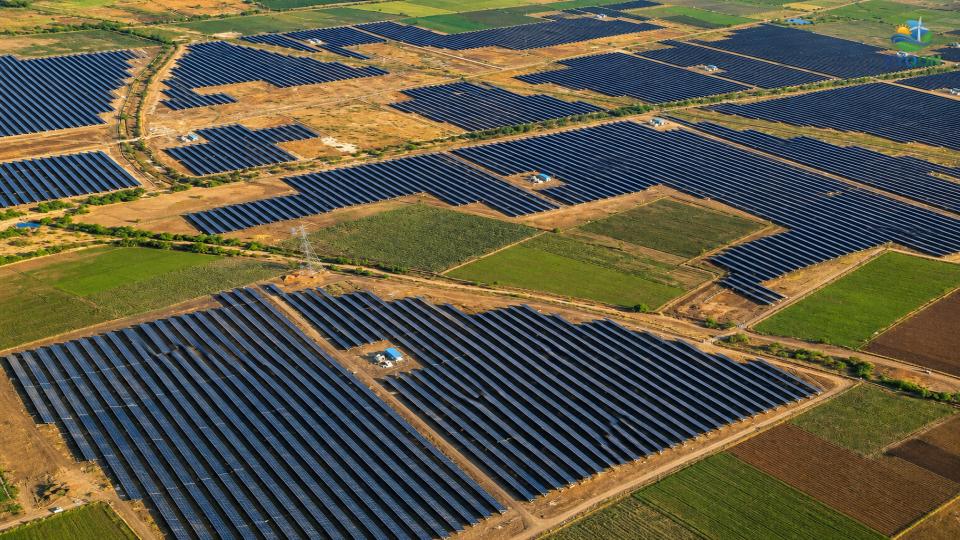
India is currently positioned to set an unprecedented, historic milestone in its domestic renewable energy journey. According to recent industry analysis, the country is on track to commission more solar capacity in 2026 than in any previous year in its installation history. Industry forecasts indicate that full-year additions will comfortably exceed 50 GWdc, surpassing the previous record of 49 GWdc established in 2025.
However, this massive surge in capacity is heavily influenced by strict new domestic sourcing policies that are simultaneously creating a near-term supply crunch and fundamentally reshaping the nation’s solar supply chain landscape. For project developers, Engineering, Procurement, and Construction (EPC) firms, and module manufacturers, understanding the nuances of these regulatory shifts is critical to navigating the 2026 market. Here is a comprehensive breakdown of the latest developments dominating the Indian solar sector.
A Record-Breaking First Half of 2026
The first half of 2026 witnessed an unprecedented rush in large-scale solar project development.
- In the first half of 2026, India successfully added a massive 34 GWdc of solar capacity.
- This incredible deployment rate represents a 38% increase compared to installation levels seen in the first half of 2025.
- This concentrated push was primarily driven by solar developers racing to accelerate project commissioning to beat the critical June deadline for the Approved List of Models and Manufacturers-II (ALMM-II).
- An additional macroeconomic driver for the accelerated build-out was the phased removal of waivers for inter-state transmission charges.
- The government’s transmission charge waiver declined from 75% to 50% for projects commissioned starting from July 2026.
- This waiver is scheduled to be phased out completely after July 2028, forcing developers to act quickly to secure better financial returns.
As the year progresses into the second half, overall installation momentum is expected to moderate. Severe constraints in domestic cell manufacturing capacity and rising module prices will weigh heavily on ongoing project development and project economics through Q3 and Q4.
Decoding the ALMM-II Mandate and the Supply-Demand Gap
The primary catalyst behind the aggressive H1 installation timeline was the looming enforcement of the Approved List of Models and Manufacturers-II (ALMM-II). The ALMM serves as India’s quality and domestic-manufacturing gatekeeper for solar equipment.
- ALMM List-I covers finished solar PV modules and dictates which panel models are grid-approved.
- The newer ALMM List-II specifically mandates that the solar PV cells inside the modules must be Indian-made and approved by the government.
- The ALMM-II policy requires that any modules used in government-supported projects must be manufactured using these domestically produced solar cells.
While the ALMM-II mandate represents a bold, strategic step toward building a fully integrated, self-reliant domestic solar supply chain, it has exposed a critical imbalance in India’s current manufacturing infrastructure. Industry research notes that domestic cell manufacturing capacity has simply not kept pace with the country’s rapidly expanding module assembly capacity.
By April 2026, ALMM List-II approved cell capacity stood at approximately 30.3 GW, while the broader module manufacturing capacity in India was estimated at roughly 193 GW. This staggering discrepancy between available cells and module production capability is creating a massive supply crunch. Consequently, analysts expect this constraint to translate into much higher system prices, with utility-scale system prices forecast to rise 20% by Q4 2026 as cell availability tightens.
Targeted Regulatory Relief: The December 2026 Exemption
To prevent a complete market stall and address the friction caused by the cell shortage, the Ministry of New and Renewable Energy (MNRE) offered targeted regulatory relief.
- On July 18, 2026, the MNRE issued Office Memorandum No. 283/53/2026-GRID SOLAR, extending the exemption from the ALMM List-II cell rule specifically for net metering and open access renewable energy projects.
- This extension pushed the compliance deadline for these specific projects from May 31, 2026, to December 31, 2026.
- This means that commercial and industrial (C&I) rooftop net metering projects, as well as open-access and group-captive renewable power projects, can continue to commission using non-List-II cells until the end of the year.
- The stated rationale behind this extension is to protect standalone module manufacturers’ existing cell inventory, preventing it from being stranded, while giving domestic List-II cell capacity more time to scale up.
- In July 2026, the MNRE also permitted waivers for projects nearing completion, provided that developers submitted their applications by July 23, 2026.
However, the MNRE was explicit that there is no blanket extension for the broader solar industry. Utility-scale solar tenders, subsidized rooftop schemes like PM Surya Ghar, and other government-linked procurement remain fully subject to ALMM List-II enforcement from June 1, 2026, onward. Starting January 1, 2027, all net-metering and open-access projects will also be required to source modules from List-I and cells from List-II, aligning with all other covered solar projects.
Shifting Import Dependencies: The Pivot to Southeast Asia
Historically heavily reliant on Chinese imports, India’s solar sector is currently navigating complex global trade dynamics as it attempts to build domestic manufacturing capacity.
- The enforcement of the ALMM-II mandate has successfully reduced India’s direct solar cell imports from China.
- However, import dependence has not faded; instead, sourcing has pivoted aggressively toward Southeast Asia.
- Indonesian solar cell imports nearly tripled in the early months of 2026.
- In the first five months of 2026 alone, India imported an estimated 20 GW of solar cells and 5 GW of wafers.
- Notably, wafer imports climbed by 86% year-on-year, a necessary increase to supply raw materials for expanding domestic cell production lines.
The attractiveness of Southeast Asian supply chains is further bolstered by India’s strict trade barriers. India currently imposes a 20% basic customs duty on imported solar cells and modules. Furthermore, in September 2025, the Directorate General of Trade Remedies (DGTR) recommended additional anti-dumping duties of up to 30% on Chinese-origin cells and modules, which is pending a final government decision. While this makes Indonesian and other Southeast Asian supply highly attractive to Indian module manufacturers, industry experts note that the risks of circumvention scrutiny for these imports remain a looming threat.
Future Price Projections and the Long-Term Manufacturing Strategy
The near-term financial impact of this aggressive transition period is largely unavoidable for the downstream sector.
- Industry analysts emphasize that any delay in commissioning the 14 GW of cell manufacturing capacity currently under construction could deepen import reliance and push system prices even higher.
- Even as new domestic cell capacity steadily comes online, insufficient factory utilization is expected to keep supply short of actual market demand throughout 2027.
- Domestic cell production in India is projected to reach approximately 29 GW next year.
- This output will still remain roughly 21 GW short of the country’s average annual module demand, which sits around 50 GW.
- As a direct consequence of this sustained supply gap, overall solar system prices are forecast to decline by a mere 3% between Q4 2026 and Q4 2027.
Looking further ahead into the decade, the overarching strategy remains robust. An estimated 130 GW of additional solar cell capacity is expected to come online by 2029. Achieving this goal requires a staggering 49% compound annual growth rate from the projected 2026 baseline of 88 GW full-build capacity.
Market analysts forecast that component prices should eventually stabilize by 2029 as this additional cell capacity becomes fully operational, though achieving this will hinge heavily on sustained policy consistency and timely execution by manufacturers. Additionally, the Ministry of New and Renewable Energy’s future plan to roll out ALMM-III in June 2028, which will extend the domestic mandate further upstream to include solar wafers, signals a continued, aggressive push toward complete manufacturing independence.
Source Reference:
Leave a Comment