
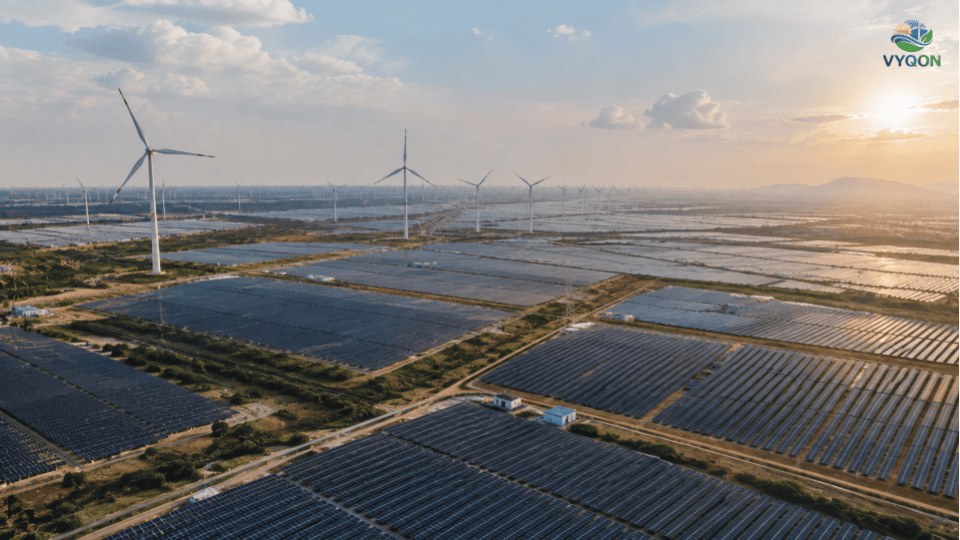
India has officially surpassed 300 GW of installed non-fossil fuel electricity generation capacity as of July 31, 2026, marking a watershed moment in the nation’s energy transition. This achievement represents the completion of 60% of the 500 GW target set for 2030 during the COP26 summit. Currently, non-fossil sources account for over 54% of India’s total electricity generation capacity, which stands at approximately 552 GW.
From a technical perspective, the most significant indicator of progress is the pace of acceleration: India moved from 250 GW to 300 GW in less than a year. This rapid scaling suggests that the 500 GW target is no longer merely an aspirational climate obligation but a feasible trajectory underpinned by industrial strategy and shifting market economics.
Capacity Breakdown: The Non-Fossil Landscape
The current non-fossil landscape is characterized by the overwhelming dominance of solar energy, which now constitutes more than half of the clean energy portfolio.
India Installed Non-Fossil Capacity (as of July 31, 2026)
| Generation Source | Installed Capacity (GW) |
| Solar Power | 164.59 |
| Wind Power | 58.14 |
| Hydro Power (Large & Small) | 57.24 |
| Bio-power | 11.75 |
| Nuclear Power | 8.78 |
| Total Non-Fossil Capacity | 300.50 |
In technical reporting, a distinction must be maintained between “Renewable” and “Non-Fossil” metrics. While “Renewable” capacity refers to solar, wind, hydro, and bio-power, the “Non-Fossil” metric is the specific benchmark for India’s Paris Agreement commitments, as it includes nuclear power. Nuclear energy, while not classified as renewable, is a critical component of the non-fossil total because it generates electricity without burning carbon-based fuels.
Historical Trajectory and Annual Growth Records
The expansion of India’s clean energy fleet since 2014 follows an exponential curve. Solar capacity has grown from a negligible 2.8 GW in 2014 to 164.59 GW in 2026—a 58-fold increase. Wind power has seen more modest but steady growth, rising from 21 GW to 58.14 GW in the same period.
The record-breaking performance of FY 2025-26 highlights this momentum. India added 55.29 GW of non-fossil capacity in a single year, comprising 44.6 GW of solar and 6 GW of wind. Notably, the solar additions in this single financial year alone were fifteen times the size of India’s entire solar fleet in 2014. This capacity growth is translating into actual generation, which surged from 190.96 billion units in 2014-15 to 477.79 billion units in 2025-26.
From a financial analysis standpoint, this transition is increasingly driven by a “structural margin advantage.” Renewable platforms are now delivering stronger profit margins and lower variable costs than thermal peers. Because renewables lack fuel costs, they generate stable, contracted cash flows that compensate for their high capital intensity, creating a widening credit divergence where clean energy assets are increasingly preferred by international institutional lenders over coal-linked credits.
Domestic Manufacturing and Policy Enablers
The sustainability of this growth is linked to the “Approved List of Models and Manufacturers” (ALMM). Enlisted capacity under ALMM has crossed 200 GW, up from 2.3 GW in 2014. Strategically, the ALMM acts as a domestic-sourcing certification gatekeeper, ensuring that the next 200 GW of solar capacity is built using indigenous infrastructure rather than imported components.
The Production Linked Incentive (PLI) scheme remains the primary industrial lever, though it faces implementation bottlenecks. By mid-2025, 31 GW of the targeted 65 GW module capacity was commissioned. While this has attracted Rs 48,120 crore in investment, it represents less than half of the program’s total goal. Other key enablers include:
- National Green Hydrogen Mission: Aiming for global leadership in hydrogen derivatives.
- PM Surya Ghar (Muft Bijli Yojana): Decentralized household rooftop expansion.
- PM-KUSUM: Solarization of agricultural feeders and pumps.
- Pradhan Mantri Surya Sarovar Yojana: A floating solar initiative targeting 5,000 MW. Critically, this scheme mandates a minimum two-hour storage capacity (10,000 MWh total) for projects to ensure grid stability.
Structural Challenges in the Transition
The transition faces sophisticated hurdles that threaten the 2030 timeline:
- Upstream Integration Gaps: India remains heavily dependent on imports for polysilicon and wafers. The PLI ramp-up has been slowed by visa restrictions and a critical shortage of Chinese technical expertise required to install and calibrate high-efficiency manufacturing lines.
- Supply Chain Volatility: Global fluctuations in raw material prices expose domestic manufacturers to cost spikes.
- Financial Risk Concentration: Analysts identify a cumulative monetary risk of up to Rs 41,834 crore for solar PLI awardees. This risk is a composite of potential bank guarantee encashments, lost government incentives, and unrealized sales revenue due to project delays or non-compliance.
The Road to 2030 and Beyond
To achieve the 500 GW commitment, India must maintain an installation rate of approximately 50 GW per year for the next four years. The long-term roadmap has been further solidified by the revised Nationally Determined Contribution (NDC) targets for 2035, which commit India to:
- Ensuring 60% of installed electricity capacity is non-fossil based.
- Achieving a 47% reduction in emissions intensity (emissions per unit of GDP) from 2005 levels.
- Creating an additional carbon sink of 3.5 to 4 billion tonnes of CO2 equivalent.
Ultimately, the 300 GW milestone confirms that the clean energy transition has shifted from a policy mandate to a central pillar of India’s industrial competitiveness and energy independence strategy.
Official Government Sources
- Press Information Bureau (PIB), Ministry of New and Renewable Energy: India Achieves Landmark 300 GW Non-Fossil Fuel Power Capacity (August 9, 2026).
- NITI Aayog, Government of India: Scenarios Towards Viksit Bharat and Net Zero: An Overview (Vol. 1) (2026).
- Press Information Bureau (PIB), Ministry of Power: Status on Pumped Storage Projects (July 20, 2026).
Leave a Comment