
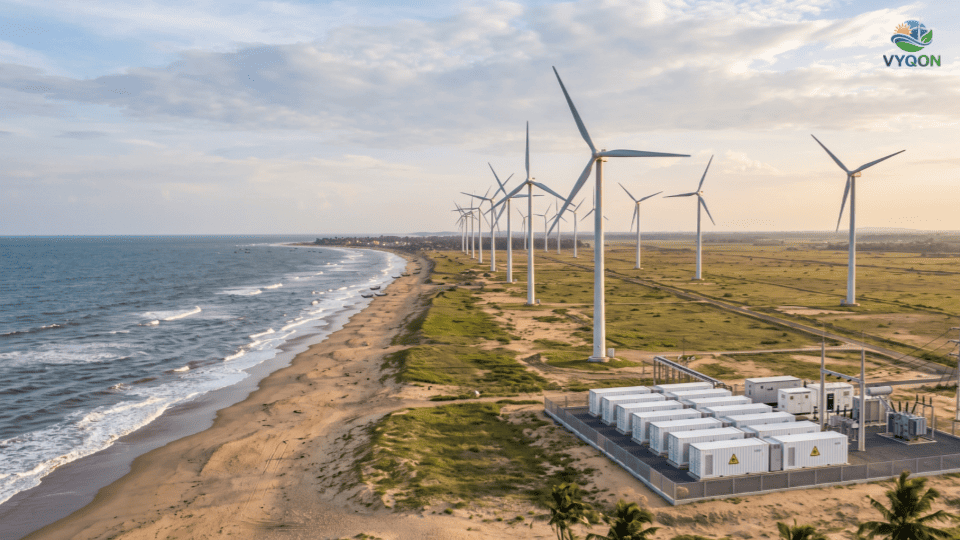
On August 12, 2026, the Odisha Cabinet, chaired by Chief Minister Mohan Charan Majhi, approved a series of strategic amendments to the Odisha Renewable Energy Policy (OREP) 2022. These revisions are designed to bolster investment confidence, ensure the delivery of affordable green power, and accelerate the execution of large-scale projects. Parallel to these Cabinet actions, the Odisha Electricity Regulatory Commission (OERC) has issued the Draft Grid Interactive Distributed Renewable Energy Sources Regulations 2026, with the Commission inviting formal stakeholder comments until the deadline of August 31, 2026.
The policy refinements impact several critical pillars of the state’s energy transition:
- Wind Energy: Removal of capacity caps and infrastructure rationalization.
- Battery Energy Storage Systems (BESS): Technical mandates and fiscal exemptions.
- Net-metering & Distributed RE: Expanded eligibility and modern metering mechanisms.
- Pumped Storage Projects (PSP): Streamlined application windows and public sector shortcuts.
- Small Hydro (SHEP): Designation of a centralized nodal agency for legacy implementation.
Removal of Wind Capacity Limits and Infrastructure Support
The Cabinet has moved to rationalize the state’s wind power framework by removing the previous 500 MW cumulative capacity cap for project allocation under the first-come-first-served mechanism. This structural shift is supported by resource assessments that identified six high-potential zones—notably in districts like Sundargarh and Angul—to move the state toward its target of 1 GW of approved wind capacity.
Technically, the state has already approved 493.5 MW under Phase I, backed by a first-of-its-kind power offtake guarantee. To facilitate further large-scale deployment, the amended policy introduces specific provisions for “Wind Power Parks.” These parks are intended to provide organized development zones with ready-to-use infrastructure, reducing the gestation period for Independent Power Producers (IPPs).
Battery Energy Storage System (BESS) Incentives and Mandates
Under the new regulatory framework (No. OERC/RA/RCO-DRES-43/2026/414), Odisha is prioritizing grid flexibility through the integration of standalone BESS. To improve project bankability, the state has introduced a targeted fiscal incentive:
STU Charge Exemption for Standalone BESS Standalone BESS commissioned in Odisha are granted an exemption of 20 paise per unit on State Transmission Utility (STU) charges. This incentive is granted to improve grid flexibility and is subject to two compliance conditions:
- The input energy must be sourced from renewable energy projects.
- The output energy must be utilized to meet the state’s internal electricity demand.
Furthermore, the OERC has introduced mandatory storage thresholds for Distributed Renewable Energy Systems (DRES) exceeding 10 kW. These systems must utilize hybrid or grid-forming inverters and ensure that at least 85% of stored energy is derived from renewable sources. Operational guidance specifies that BESS should preferably be charged during solar hours to maximize decarbonization.
Mandatory BESS Capacity Thresholds
| Project Capacity | Minimum Storage Capacity |
| Projects up to 100 kW | 10% of installed capacity |
| Projects >100 kW to 500 kW | 20% of installed capacity |
| Projects >500 kW to 10 MW | 30% of installed capacity |
Electricity Duty Exemptions and Net-Metering Updates
The Cabinet has extended financial relief to consumers adopting distributed renewable energy by authorizing an Electricity Duty (ED) exemption of 50 paise per unit. This exemption is available for a duration of 10 years from the date of commissioning for eligible net-metering consumers.
Per the OERC 2026 draft, net-metering remains a priority mechanism for specific categories including domestic consumers, government educational institutions, government hospitals, local authority buildings, and agricultural consumers. To accommodate diverse urban and industrial requirements, the state has defined five additional metering mechanisms:
- Net Billing: Imported and exported energy are accounted for separately using distinct tariff rates.
- Gross Metering: All generated energy is exported to the grid at a Commission-determined feed-in tariff.
- Group Net Metering: Allows surplus energy from one service connection to be adjusted against other connections owned by the same consumer.
- Virtual Net Metering: Facilitates shared renewable energy benefits across different geographical locations or substations.
- Behind-the-Meter (BTM): Energy is consumed locally for peak shaving and load management without feeding surplus into the grid.
Pumped Storage Projects (PSP) and Small Hydro (SHEP) Framework
Amendments to the PSP Policy 2025 focus on reducing procedural friction for developers. The registration window for identifying sites and submitting applications has been significantly extended from three weeks to three months, allowing for more robust feasibility studies.
Key procedural and fiscal updates include:
- Public Sector Shortcut: Sites identified by Central Public Sector Undertakings (CPSUs) or State Public Sector Undertakings (SPSUs) can now be developed via MoU or nomination basis, treating them as equivalent to state-identified sites.
- Right of First Refusal (RoFR): RoFR for captive users is capped at 25%, while IPPs may access up to 50%.
- Registration Fees: Fixed at ₹10,000 per MW, with a cumulative cap of ₹1 crore per project.
- SHEP Nodal Agency: GRIDCO Limited has been designated as the Nodal Agency to oversee the implementation of legacy Small Hydro Electric Projects, harmonizing guidelines across the hydro portfolio.
Implementation Guidelines and Technical Constraints
To maintain grid stability, a “Hard Limit” has been established for transformer saturation. The aggregate capacity of DRES is strictly capped at 90% of the rated capacity of the transformer. This requires developers to conduct early-stage feasibility studies in high-penetration zones.
Distribution licensees are now mandated to modernize their administrative infrastructure by:
- Establishing dedicated online portals for real-time application tracking.
- Publishing Standard Operating Procedures (SOPs) for grid interconnection.
- Updating billing infrastructure to support digital energy accounting and settlement of surplus generation via direct digital transfers.
The GRIDCO Renewable Energy Nodal Agency (RENA) Cell will remain the central body driving the operationalization of these diversified portfolios.
The approved amendments represent a comprehensive rework of Odisha’s implementation architecture, aligning the state with its goal of reaching 10.96 GW of renewable capacity by 2030. By addressing the specific needs of the wind, storage, and distributed energy sectors, the Cabinet has established a unified framework for large-scale execution. Per the Cabinet’s decision, these revised provisions will be automatically incorporated into existing operational guidelines, ensuring immediate applicability for investors and developers.
Official Sources & References
- Odisha Electricity Regulatory Commission (OERC) The official state administrative body responsible for notifications, draft regulations (including the 2026 Grid Interactive Distributed Renewable Energy draft), and public notices.
- Department of Energy, Government of Odisha The primary state government department overseeing the implementation of the Odisha Renewable Energy Policy (OREP) 2022 and the Pumped Storage Projects (PSP) Policy 2025.
- Central Electricity Authority (CEA), Ministry of Power The central statutory organization providing official technical data on India’s generation mix, installed capacity, and the Resource Adequacy Plan for Odisha.
- Ministry of New and Renewable Energy (MNRE), Government of India The federal ministry responsible for national renewable energy statistics, development programs, and potential assessments.
- Odisha Electricity Regulatory Commission – Filings Portal The reference platform hosting official utility filings, such as the TPWODL Open Access Charges Application.
Leave a Comment