
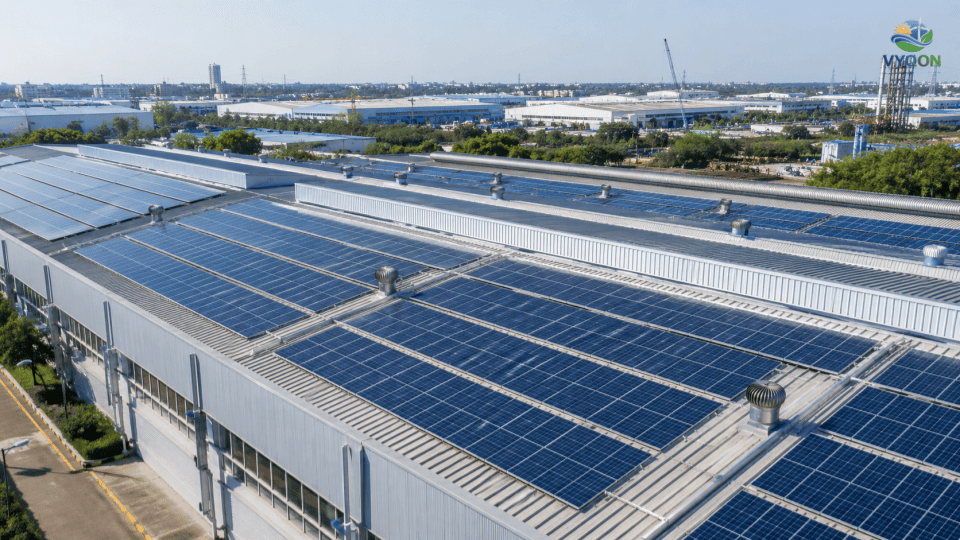
TBK India Private Limited has commissioned an expansion of its rooftop solar power plant at the Shirval, Khandala facility, bringing the site’s total renewable capacity to 1,024.2 kW. The manufacturer of commercial vehicle safety components initiated this Phase 2 expansion as a direct result of the high performance and successful financial returns documented from its initial 2022 solar installation. This project milestone underscores the facility’s transition toward energy self-sufficiency amidst a shifting industrial landscape in the Satara district.
Project Breakdown and Timeline
The project followed a tiered implementation strategy, scaling from an initial sub-megawatt installation to a full megawatt-scale system. The technical and operational metrics of the expansion are detailed below:
| Phase Identifier | Capacity (kW) | Commissioning Date/Status | Location Detail |
| Phase 1 | 750.2 kW | Commissioned (2022) | Shirval, Khandala Facility |
| Phase 2 | 274.0 kW | Commissioned (2025/26) | Shirval, Khandala Facility |
| Total System | 1,024.2 kW | Fully Operational | Shirval, Satara District |
Financial and Performance Triggers:
- Performance Benchmarking: The 274 kW addition was formally justified by “successful Phase 1 returns,” validating the economic viability of on-site solar for the facility’s heavy manufacturing load.
- Turnkey EPC Execution: The expansion utilized professional Engineering, Procurement, and Construction (EPC) solutions to integrate the new capacity with existing factory infrastructure.
- Operational Monitoring: The system incorporates proprietary remote monitoring to maintain peak plant performance and real-time data visibility for facility managers.
Facility and Operational Impact
The Shirval facility’s investment in renewable energy is a strategic response to regional economic pressures. Located in the Khandala region of the Satara district, the plant is positioned in a corridor that has recently seen an influx of approximately 20 industrial units migrating from Chakan. This industrial shift is attributed to severe infrastructure challenges in Chakan, including traffic congestion and pothole-ridden roads, whereas Khandala offers established infrastructure more conducive to MSME operations.
Operationally, the 1,024.2 kW solar system mitigates the impact of rising electricity tariffs and the Maharashtra Electricity Regulatory Commission’s (MERC) Time-of-Day (ToD) charges, which increase costs during peak evening windows. By generating a significant portion of its own power, TBK India reduces grid dependency and hedges against price volatility.
Environmental Contribution: Beyond energy savings, the facility has integrated broader sustainability measures. Alongside the transition to clean energy, TBK India has planted approximately 164 trees within the factory premises over the past three years to enhance the site’s ecological footprint.
Corporate Context and Stakeholder Statements
TBK India Private Limited is a key subsidiary of Japan-based TBK Co. Ltd., a global supplier of critical safety components including brakes, pumps, and engine parts for the medium and heavy commercial vehicle (M&HCV) segment.
The expansion aligns with a recent strategic capital and business alliance between TBK Co. Ltd. and Brakes India (part of the TVS Group). As part of this agreement, Brakes India has acquired a 10 per cent stake in the Japanese auto component maker through a primary capital infusion, facilitating deeper technological integration.
Kaoru Ogata, President & CEO of TBK Co. Ltd., commented on the group’s collaborative direction:
“Through this partnership, both companies will mutually complement each other’s technological strengths and customer bases to the fullest extent, jointly creating high value-added products and solutions for respective markets.”
Sriram Viji, Managing Director of Brakes India, noted the broader market impact:
“With this agreement, Brakes India will have access to TBK’s line-up of products for the Indian market and will offer its leading pneumatic braking products to new customers outside India.”
Technical and Regulatory Footnote
Industrial solar expansions in Maharashtra are governed by the Multi-Year Tariff (MYT) 2026 order and MERC net metering rules. Key regulatory factors for large-scale on-site systems include:
- Grid Support Charges: As of April 1, 2026, consumers with a sanctioned load above 10 kW are subject to grid support charges levied on total solar generation. These rates are set at Rs. 1.96 per unit for Low Tension (LT) consumers and Rs. 1.42 per unit for High Tension (HT) consumers.
- Banking Regulations: The previous 12% banking deduction on extra solar units sent to the grid was officially removed as of April 1, 2026, allowing for a full carry-forward of exported units.
- Investment Profile:
- Return on Investment (ROI): 3 to 5 years (typical for industrial CAPEX models in India).
- System Lifespan: 25+ years, supported by high-efficiency panels and automated asset management.
Official Sources
- TBK Co., Ltd. (Official Company Website)
- Kalpa Power (Official Company Website)
- Mittal Plastomet Ltd. (Official Company Website)
- SolarSquare Energy (Official Company Website)
- GSE Renewables (Official Company Website)
Leave a Comment