
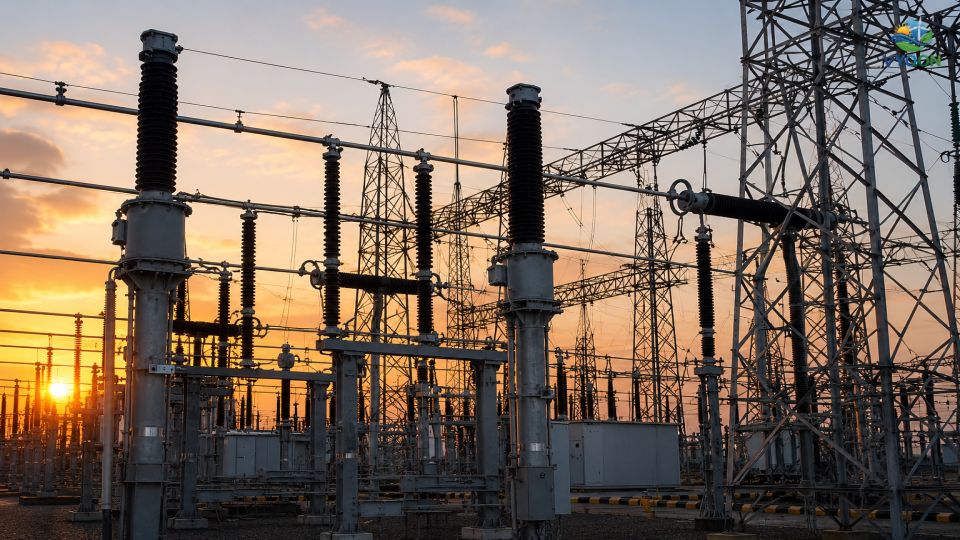
India is currently celebrating unprecedented milestones in its clean energy journey, having recently surpassed 300 GW of non-fossil fuel capacity and adding a record-breaking 27 GW of solar in the first half of 2026 alone. However, a paradox is emerging at the heart of this transition: as generation capacity skyrockets, the physical infrastructure required to transport that electricity is struggling to keep pace.
According to a highly detailed analysis released by the independent energy think tank Ember, India is experiencing a sharp and financially damaging rise in renewable energy curtailment. Developers are increasingly finding that the electrons they generate have nowhere to go, stranded by severe transmission constraints and systemic inflexibility.
For developers, Engineering, Procurement, and Construction (EPC) firms, and state policymakers, this data highlights a critical juncture. The widening mismatch between fast-moving solar projects and slower-moving transmission infrastructure is rapidly becoming the most severe operational risk to India’s 2030 target of 500 GW of non-fossil electricity.
Here is a comprehensive deep dive into the scale of the curtailment crisis, the underlying infrastructural deficit, the financial implications for the market, and the strategic solutions required to fix the grid.
Unpacking the Q1 2026 Curtailment Data: A Material Loss
The term “curtailment” refers to the deliberate reduction in electrical output below what a solar or wind farm could have otherwise produced, typically mandated by grid operators to maintain system stability. While some curtailment is normal in highly renewable grids, the scale currently observed in India points to structural bottlenecks.
The sheer volume of clean energy lost in the early months of 2026 highlights the urgency of the problem. Ember’s analysis of the national grid reveals staggering figures for the first quarter (January to March) of the year:
- Total Renewable Curtailment: The national grid was forced to curtail approximately 470 gigawatt-hours (GWh) of renewable energy across inter-state projects in Q1 2026.
- The Transmission Penalty: Of that 470 GWh total, nearly two-thirds—roughly 300 GWh—stemmed directly from severe transmission bottlenecks.
- System Inflexibility: The remaining 170 GWh of lost power was attributed to broader system inflexibility, meaning the grid lacked the demand or the operational agility to absorb the power at the exact time it was generated.
To put the scale of this loss into a tangible perspective, Ember isolated the data from a single day: March 30, 2026. On that day alone, the country lost 34 GWh of clean electricity generation. This single-day loss is equivalent to the total daily power consumption of approximately 5 million urban middle-class Indian households.
The Regional Divide: Congestion in the North and West
The curtailment crisis is not a uniformly national problem; it is highly concentrated in specific resource-rich corridors that have seen massive, rapid utility-scale build-outs without adequate commensurate transmission upgrades.
Ember’s data breaks down the 300 GWh of transmission-related curtailment by region, revealing a stark geographic divide in grid management success:
- The Northern Region: The northern grid bore the brunt of the infrastructure failure, accounting for 178 GWh of the curtailed clean electricity. States like Rajasthan, which have seen explosive solar growth, are experiencing severe congestion at key pooling stations.
- The Western Region: Close behind, the western regional grid pooling stations accounted for 122 GWh of stranded power. Gujarat and Maharashtra’s aggressive renewable capacity additions are testing the limits of local evacuation infrastructure.
- The Southern Region: In stark contrast, the southern regional grid recorded absolutely zero transmission-related curtailment during this same quarter. This zero-curtailment success rate reflects a much stronger, pre-planned synchronization between renewable generation growth and the requisite grid infrastructure upgrades in the southern states.
The Root Cause: A Growing Infrastructure Deficit
Why is the grid failing to keep up with generation? The core issue lies in the wildly divergent timelines of modern project development.
Historically, transmission planning timelines in India were synchronized with the development of massive thermal coal plants, which typically take 36 to 60 months to construct and bring online. In contrast, modern solar energy projects can be deployed and operational much faster, often within 12 to 18 months. The grid simply cannot be built fast enough to catch the solar panels being installed.
Furthermore, execution on grid expansion has consistently fallen short of government ambitions.
- Over the past five years, India has met only about 80% of its annual transmission build-out targets.
- This historical shortfall has created a massive, cascading backlog. For the financial year (FY) 2026–27, the government’s target for the Inter-State Transmission System (ISTS) has been forced to surge sharply to 25,146 circuit kilometers (ckm)—a target far exceeding recent historical achievement levels.
- Currently, one in four major Inter-State Transmission System schemes nationwide faces a delay of a year or more.
These delays are rarely due to a lack of capital. Instead, they are bogged down by complex right-of-way disputes, fragmented land ownership negotiations, prolonged forest and biodiversity clearances, and a tightening global supply chain for specialized high-voltage direct current (HVDC) components.
Financial Fallout: The Impact on Developer Returns
For solar developers and investors, curtailment is not just a technical inconvenience—it is a direct hit to project profitability. The inability to evacuate power effectively dampens investor confidence and threatens the financial viability of marginal projects.
According to industry analysts, nearly 20 GW of renewable energy capacity is likely to face connectivity delays exceeding four months during FY 2026–27. Some major stations in Rajasthan are already experiencing significantly longer wait times.
The financial penalties for these delays are severe:
- IRR Erosion: A 6- to 12-month delay in grid connectivity can cut a project’s internal rate of return (IRR) by a massive 100 to 200 basis points.
- Lack of Compensation: Plants that are forced to connect under Temporary General Network Access (T-GNA) earn absolutely no financial compensation when their power is curtailed by the grid operator. Every stranded electron is permanently lost revenue.
The Macroeconomic Sting: Geopolitics and Lost Energy
The 300 GWh of clean energy lost in Q1 2026 hurt the broader Indian economy beyond just the renewable sector.
Ember’s report heavily emphasized that this loss of domestic renewable electricity occurred precisely when India was facing elevated, highly volatile natural gas prices. Linked to intense geopolitical tensions in West Asia—specifically the escalating US-Israel-Iran conflicts—spot gas prices during this period had nearly doubled from their previous baseline levels.
Had the grid been capable of absorbing that 300 GWh of solar power, the country could have significantly reduced its reliance on costly natural gas imports during a price spike. Alternatively, it could have freed up those scarce domestic gas supplies for higher-priority, hard-to-abate industrial uses outside of the power sector.
Regulatory Reforms and Technical Upgrades
Alongside battery storage, immediate regulatory and technical upgrades are required to squeeze more efficiency out of the existing grid.
- Technological Interventions: Deploying advanced grid technologies such as Dynamic Line Rating (DLR) and reconductoring existing lines with advanced composite materials can immediately enhance the thermal transfer capacity of the current infrastructure, allowing more power to flow without laying new foundations.
- Intra-State Deployment: Harmonizing curtailment compensation frameworks and making intra-state connectivity procedures more transparent could encourage developers to shift their focus toward intra-state project deployment, thereby easing the immense pressure on the already congested inter-state (ISTS) corridors.
As India pushes toward its monumental 500 GW goal, the mandate is clear: the era of simply building solar farms and assuming the grid will catch up is over. The next phase of the energy transition will be defined entirely by the speed, intelligence, and flexibility of the transmission network.
References:
Ember Analysis: India lost 300 million units of renewable energy owing to transmission constraints in Q1 2026
ET Energyworld: India lost 300 GWh of renewable energy due to transmission constraints in Q1 2026: Ember
Fortune India: India lost 300 million units of renewable energy in Q1 due to grid bottlenecks: Ember
Businessworld: India Loses 300 GWh Renewable Power In Q1FY26 Due To Transmission Constraints
Leave a Comment