
Tender focuses on the operational side of solar power
NTPC Green Energy Limited invited bids for forecasting and scheduling Qualified Coordinating Agency services for its 296 MW Fatehgarh Solar Project in Rajasthan. The procurement was issued under tender reference NGEL-CS-200156289 and tender ID 2026_NGEL_111312_1 through NTPC’s official eProcurement portal. The tender opened on 26 August 2026, with the portal listing 28 August as the bid-submission deadline.
The opportunity is different from an engineering, procurement and construction tender. It does not seek solar modules, mounting structures or inverters. Instead, it concerns the continuous operational task of predicting how much electricity the plant will generate, submitting schedules to the grid and revising those schedules as weather and plant conditions change. This work becomes more valuable as renewable capacity increases because grid operators need accurate information about expected injections.
What a Qualified Coordinating Agency does
A Qualified Coordinating Agency acts as the interface between renewable generators and the electricity-system institutions responsible for scheduling and settlement. Depending on applicable regulations and contractual scope, the agency may prepare day-ahead forecasts, submit schedules, update intraday revisions, collect real-time generation data, coordinate with load-dispatch centres and calculate deviations between scheduled and actual output.
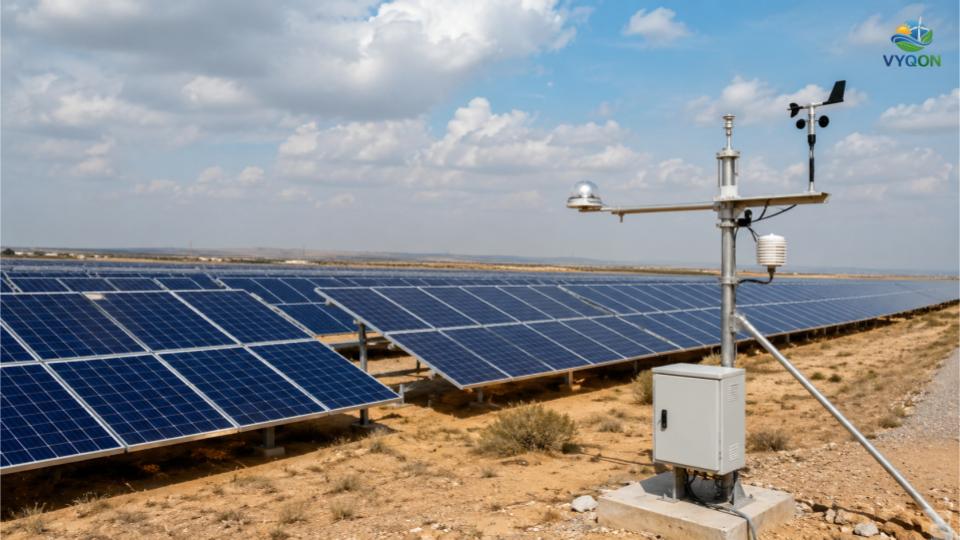
Forecasting models use weather predictions, historical plant performance, satellite information, on-site sensors and operational data. A good forecast must translate solar irradiation, cloud movement, temperature and equipment availability into expected power generation for defined time blocks. The process is not static. If cloud cover changes or equipment becomes unavailable, the schedule may need revision within the windows permitted by grid rules.
Why solar forecasting is technically difficult
Solar output can change rapidly when cloud systems pass over a project. Temperature also affects module performance, while dust, soiling, inverter limits, maintenance and grid outages can change the relationship between available sunlight and delivered power. A forecasting service must therefore understand both meteorology and the electrical behaviour of the plant.
A 296 MW project is large enough that forecasting errors can be material. If actual generation is significantly lower or higher than scheduled, the grid has to compensate using other resources. Repeated deviations can also create commercial exposure under deviation-settlement and scheduling frameworks. Accurate forecasting cannot remove weather uncertainty, but it can reduce avoidable error and make the remaining uncertainty more manageable.
How better schedules support grid stability
Electricity supply and demand must remain balanced continuously. Grid operators use generator schedules to plan reserves, transmission flows and the dispatch of controllable plants. When a solar generator provides a dependable forecast, operators can prepare for its daytime ramp-up and evening decline. When forecasts are poor, the system must carry more flexibility as insurance.
Forecasting also interacts with battery storage and hybrid generation. A solar-plus-storage plant may use a forecast to decide when to charge batteries, maintain reserves or deliver a contracted profile. Even for a solar-only asset, accurate estimates can support maintenance planning, energy accounting and performance analysis. Digital operations are therefore becoming as important to renewable reliability as physical equipment.
What bidders and project operators must consider
A QCA provider needs robust data connectivity, secure software, experienced forecasting staff and processes that can operate every day. The service must continue during communication failures and unusual weather events, when accurate information is most valuable. Data quality is another major issue: missing sensor values, incorrect plant-capacity mapping or delayed telemetry can weaken even a sophisticated forecasting model.
For NTPC Green Energy, selecting the agency is only one control. The project operator must maintain calibrated instruments, reliable supervisory control and data acquisition systems, clear outage reporting and effective coordination between the plant and forecasting team. Performance should be assessed through forecast-error metrics and operational outcomes rather than only the delivery of scheduled reports.
Data governance and cybersecurity are part of forecasting quality
Forecasting requires a continuous flow of plant and weather data, which makes access control and cybersecurity operational concerns rather than separate information-technology topics. The service provider should use authenticated connections, defined user permissions, audit logs, backups and incident-response procedures. A forecast platform that produces accurate numbers but exposes plant-control or commercial data would not be a reliable solution.
Data ownership should also be clear. Contracts need to define who can use historical generation data, how long records are retained, how models are transferred at the end of the service and how confidential information is protected. These provisions reduce dependency on a single vendor and allow the project owner to maintain a continuous performance history. As renewable fleets grow, standardised and secure data architecture will make it easier to compare plants and improve forecasting models across multiple locations.
Conclusion
The Fatehgarh tender demonstrates that utility-scale solar is becoming a data-intensive grid business. India will need not only more modules and inverters but also forecasting platforms, secure communication, skilled operators and disciplined scheduling processes. For a 296 MW project, these services can influence regulatory compliance, commercial performance and the ease with which the grid absorbs renewable electricity. The procurement may appear modest beside a large EPC contract, but it represents a capability that will become increasingly important with every additional gigawatt of solar capacity.
Original documents and references
Source 1: Official NTPC eProcurement portal
Source details: The official tender-results page lists the procurement title, NTPC Green Energy as the buyer, Tender ID 2026_NGEL_111312_1, reference NGEL-CS-200156289 and the bidding dates.
Direct page link: https://eprocurentpc.nic.in/nicgep/app?component=%24DirectLink&page=FrontEndAdvancedSearchResult&service=direct
Source 2: SolarQuarter tender report
Source details: SolarQuarter summarises the invitation for forecasting and scheduling QCA services and explains why the service supports plant operations and grid-scheduling compliance.
Direct page link: https://solarquarter.com/2026/08/27/ntpc-green-energy-invites-bids-for-qca-services-for-296-mw-fatehgarh-solar-project/
Source 3: Mercom India report
Source details: Mercom India provides an additional industry summary of the 296 MW Fatehgarh procurement, including its service scope and tender timeline.
Direct page link: https://www.mercomindia.com/ntpc-green-seeks-quality-coordinating-agency-for-296-mw-solar-project
Leave a Comment